Growing property management companies run into predictable problems: mixed operating and trust funds, missed vendor invoices, owner statements nobody can decipher, murky cash flow, and reconciliations done by hand at month-end. A property management company may oversee dozens or even hundreds of properties, each with its own income, expenses, and owner arrangements — and the accounting has to keep up.
This guide walks through the basics, the account structure, transaction controls, reporting, and when to bring in software or professional help.
Accurate accounting isn't optional overhead. It supports compliance, keeps owners trusting your numbers, simplifies tax season, and gives you the data to make better property-level decisions.
Key Takeaways
- Property-level records, not just company-wide totals, drive better owner reporting and decision-making
- Security deposits are liabilities, never income, until they're returned or legally retained
- Monthly reconciliation and clear fund separation prevent the biggest compliance risks
- The right software depends on portfolio size, not brand popularity
- Complex reporting or multi-entity structures often justify outsourced or professional support
What Is Property Management Accounting?
Property management accounting is the process of recording, classifying, reconciling, and reporting financial activity for managed properties and for the management company itself. It is standard bookkeeping broken down by property, owner, tenant, and fund.
The Transactions You're Actually Tracking
A typical portfolio generates activity across several categories:
- Rental income and late fees
- Management fees earned by the company
- Security deposits held on behalf of tenants
- Owner contributions and distributions
- Maintenance, repairs, and capital improvements
- Utilities, insurance, and property taxes
- Vendor invoices and reserve fund transfers
- Company overhead kept separate from property expenses
Why It's Different From General Business Accounting
Standard bookkeeping tracks one entity. Property management accounting tracks activity by property, unit, owner, tenant, and fund type, often across multiple LLCs or ownership structures at once.
One repair invoice may need coding to a specific unit, billing back to a specific owner, and correct reflection on that owner's monthly statement, while staying separate from the management company's own books.
Cash Basis vs. Accrual Basis
The IRS recognizes two primary methods, and the choice affects when income and expenses show up on your books.
| Method | When Income Is Recorded | When Expenses Are Recorded |
|---|---|---|
| Cash basis | When received | When paid |
| Accrual basis | When earned | When incurred |
According to IRS Publication 538, no single method is required for every taxpayer. The method you choose must clearly reflect income and expenses, and you generally must apply it consistently year to year. Smaller operations often run cash basis; larger companies that need GAAP-consistent reporting usually run accrual. A CPA can confirm which method fits your entity structure and reporting needs.
Who Actually Uses This Information
Those books only matter if the right people can act on them. Property owners want performance visibility. Investors and lenders evaluate risk. Tax professionals need clean figures at year-end. Internal teams need current data for day-to-day calls, from approving a repair to deciding when to raise rents on a unit.
Setting Up a Property Management Accounting System
Before you record a single transaction, you need a clear structure. Skipping this step is how companies end up with owner statements that don't add up months later.
Building the Account and Entity Structure
Start by identifying:
- Each managed property and its legal ownership entity
- The operating business handling management duties
- Bank accounts tied to each entity or property
- Who's responsible for reporting on each one
Once a portfolio grows past two or three doors, separate bank accounts per entity, and ideally per property, become standard practice.
Creating a Property-Specific Chart of Accounts
A property management chart of accounts organizes around assets, liabilities, equity, income, and expenses, with subaccounts built specifically for rental activity:
- Rent, late fees, and pet fees under income
- Security deposits and reserves under liabilities
- Repairs, capital improvements, insurance, property tax, and management fees under expenses
Example: A $450 plumbing repair invoice should be coded to the specific property, tagged to the responsible owner, categorized as a repair expense (not a capital improvement), and matched to the vendor record. Miss any one of those, and the owner statement won't reconcile.
Choosing the Right Platform
| Tool Type | Best Fit | Watch For |
|---|---|---|
| Spreadsheets | 1–2 properties, simple needs | No audit trail, error-prone at scale |
| QuickBooks Online / Xero | Individual investors, small-to-medium portfolios | Limited property-specific reporting |
| Buildium / AppFolio | Multi-property managers | Steeper learning curve, platform-specific workflows |
| Stessa | Rental owners tracking performance | Not built for full-service management |
QuickBooks Online and Xero both support role-based permissions and multi-factor authentication, plus transaction logs that record who changed what and when, which builds a usable audit trail at any portfolio size.
A Simple Implementation Sequence
- Define your chart of accounts before importing anything so every transaction has a clear home
- Import opening balances for each entity to set a clean starting point
- Connect and reconcile bank feeds before you post live activity
- Set approval rules and thresholds for payments and adjustments
- Test owner and property reports before going live
- Train users and lock in a recurring monthly close calendar

Managing Transactions, Trust Funds, and Internal Controls
This is where most property management accounting problems actually start : the biggest compliance risk lives.
Keep Fund Types Separate
Operating funds, owner funds, tenant deposits, and reserves are different categories and should never be commingled.
- Keep owner and tenant money out of operating accounts
- Treat those balances as belonging to the people they were collected from
- Confirm trust-account rules with a licensed attorney or your state regulator—requirements vary by state
Security Deposits Are Liabilities, Not Revenue
Per IRS Publication 527, a refundable security deposit isn't income when received if it's intended to be returned. It becomes income only when retained due to lease noncompliance, such as damage or unpaid rent. Practically, that means:
- Record deposits as balance-sheet liabilities
- Maintain a ledger for every tenant
- Document any deductions with receipts or invoices
- Follow your state's deadlines for returning remaining balances
The AR and AP Workflows
Accounts receivable:
- Post charges per lease terms
- Record payments as they arrive
- Flag accounts aging past 30 days weekly
- Start collection follow-up well before 90 days
Accounts payable:
- Collect vendor documentation before approving
- Match invoices against approved work orders
- Code expenses to the correct property
- Route larger invoices (many companies use a $5,000 threshold) through additional approval
- Retain supporting records for every payment
Reconciliation and Controls That Actually Prevent Problems
Reconcile every bank and trust account monthly. Match books to statements, clear unmatched items, and confirm owner and tenant balances tie out.
Layer in controls like:
- Role-based access limiting who can approve versus who can pay
- Locked accounting periods once a month closes
- Documented sign-off from a reviewer, not just the preparer
- Same-week review of anything unusual, not a three-month lag
Contractor payments also carry a federal reporting requirement. Current IRS rules require Form 1099-NEC for any nonemployee paid at least $600 for services in the course of business, with filings due January 31.
Financial Reports and the Month-End Accounting Cycle
Reports only matter if they answer a specific question. Here's what each one is actually for:
| Report | Question It Answers |
|---|---|
| Owner statement | What happened to this owner's money this month? |
| Income statement (P&L) | Is this property profitable? |
| Balance sheet | What do we own and owe as of today? |
| Cash flow report | Do we have enough cash on hand? |
| Rent roll | What's the expected income and occupancy? |
| Budget vs. actual | Where are we off track, and by how much? |
Property-Level vs. Company-Level Views
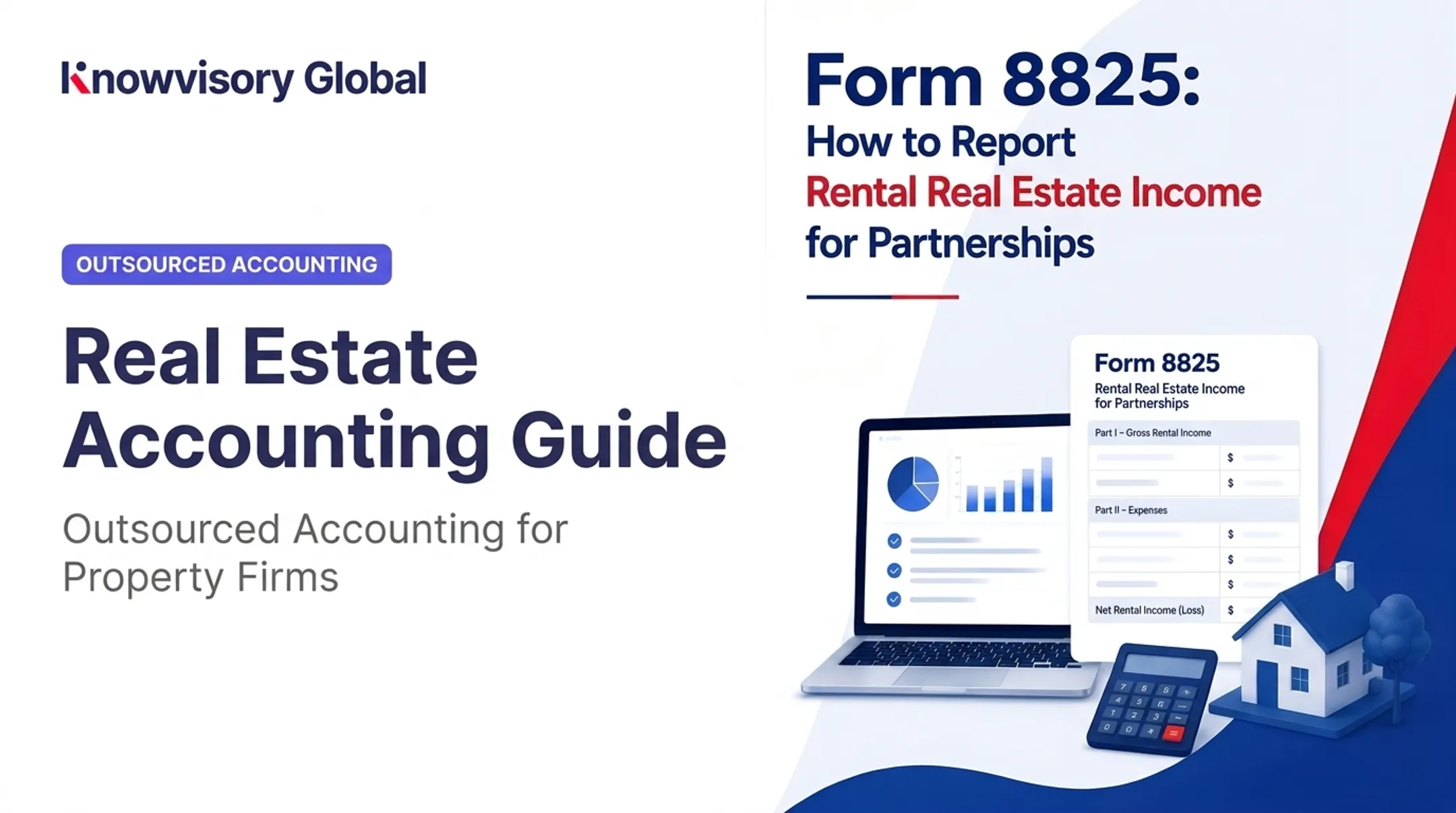
A manager needs to evaluate one property's health without losing sight of the whole portfolio. Every property should have its own P&L, which then rolls up into a consolidated company view. This is also how IRS Form 8825 works for reporting rental real estate income — each property gets its own column, with additional pages required once you pass eight properties.
Mapping the Month-End Cycle
- Record all transactions and chase down missing invoices or receipts
- Reconcile bank and trust accounts so cash matches the books
- Post accruals and adjusting entries (depreciation, prepaid expenses, accrued costs)
- Review reports for errors before anything goes to owners
- Generate owner statements and property-level financial reports
- Process owner distributions per the management agreement
- Close the period so new activity posts to the next month

Reading the Trends That Matter
Unpaid rent, rising repair costs, and vacancy gaps show up fastest in monthly comparisons — not annual ones. A reserve fund covering 3–6 months of operating costs gives you breathing room when an emergency repair or unexpected vacancy hits.
Also watch the gap between net income and cash on hand. A property can show a paper loss after depreciation and still put real cash in an owner's pocket.
Making Reports Useful to Non-Accountants
Owners aren't accountants. Make each packet easy to read:
- Keep expense and income categories consistent month to month
- Separate one-time items from recurring operating costs
- Explain material variances in plain language
- Attach supporting docs when a number needs context
Best Practices, Software, and When to Bring in Help
A short checklist covers most of what separates clean books from constant catch-up work:
- Enter transactions within 24-48 hours, not weeks later
- Reconcile every account monthly, without exception
- Keep digital, organized records for every invoice and receipt
- Review budgets against actuals on a recurring basis
- Monitor reserve balances before they run low
- Document every approval decision
- Revisit the chart of accounts as the portfolio grows
What to Prioritize in Software
Beyond the platform comparison covered earlier, prioritize software that supports:
- Automated bank feeds
- Property- and unit-level tracking
- Owner and tenant ledgers
- Integrated AP/AR
- Customizable reporting
- Secure document storage and granular user permissions
None of these replace sound processes. They simply make consistent processes easier to maintain.
When to Bring in a Professional
Spreadsheets and basic software work fine for one or two properties. Once you're managing multiple owners, multiple entities, or complex reporting needs, the calculation changes. According to the Bureau of Labor Statistics, the median annual wage for bookkeeping, accounting, and auditing clerks was $50,670 in 2025 — a useful benchmark when weighing in-house hiring against outsourced support.
For teams that choose outsourced support, a firm like KnowVisory Global can fill that gap. CPA- and CA-credentialed professionals work with startups and SMEs, including property managers running multiple LLCs, partnerships, or mixed portfolios, on bookkeeping, monthly reconciliations, property-level reporting, and workflow automation.

KnowVisory Global is a finance and accounting partner, not a property management platform and not a source of legal advice. State-specific trust account or landlord-tenant questions still belong with an attorney or your state regulator.
Conclusion
Reliable property management accounting comes down to three things: accurate property-level records, strict separation of fund types, and consistent reconciliation and reporting. Skip any one of those, and the cracks show up eventually, usually in an owner statement that doesn't add up.
If you're starting from scratch or cleaning up an existing mess, work through this sequence:
- Review your current account structure
- Separate fund types across accounts
- Standardize your chart of accounts
- Build a monthly close checklist
- Assess whether software or outside accounting support fills your gaps
Financial clarity is what lets you tell an owner exactly why their property underperformed last quarter. It also helps you plan the next capital expense before it becomes an emergency and spot the one unit quietly draining your margins.
If your books need a cleanup or you want steady property-level reporting without building a full in-house team, KnowVisory Global can support the accounting work behind that clarity.
Frequently Asked Questions
What is property management accounting?
Property management accounting is the process of recording, reconciling, and reporting financial activity for managed properties—including rent, expenses, and owner or tenant funds. It supports compliance, accurate tax preparation, and reliable financial reporting.
What does a property management accountant do?
Property management accountants handle transaction recording, monthly reconciliations, accounts payable and receivable, security deposit tracking, and owner reporting. They also coordinate with tax professionals during month-end and year-end close.
Do you need a CPA to be a property accountant?
Not always — routine bookkeeping generally doesn't require a CPA license. Requirements depend on the role, entity structure, tax work involved, and state rules, so verify specifics with a qualified professional.
What are the best practices for property management accounting?
Keep owner, tenant, and operating funds separate, use a property-level chart of accounts, and post transactions promptly. Reconcile monthly, document every approval, and have a bookkeeper or CPA review the books so issues don't compound.
Which accounting software is best for property management?
It depends on portfolio size, ownership structure, trust accounting needs, and required integrations. Compare platforms like QuickBooks Online, Buildium, AppFolio, Xero, and Stessa against your specific requirements rather than picking one by reputation alone.