Introduction
Accounts payable isn't just about paying bills on time. It shapes how much cash you have on hand, how accurate your financials are, and how quickly you can close the books each month.
Many growing businesses struggle with the basics:
- Invoices arrive by email, mail, and vendor portals with no single intake point
- Approval ownership is unclear
- Duplicate payments slip through
- Due dates get missed
- No clear view of what's coming due next week
This guide walks through the full AP process, practical controls that reduce risk, and where automation actually helps. You'll also get the metrics worth tracking and a phased approach startups and SMEs can use to improve AP without overhauling everything at once.
Key Takeaways
- Effective AP connects invoice intake, validation, approval, payment, and reconciliation into one controlled workflow.
- Three-way matching, segregation of duties, and clean vendor data reduce payment and reporting risk.
- Strategic payment timing protects cash flow while preserving vendor goodwill and capturing discounts.
- Automation works best when it reinforces a documented AP process.
- Startups and SMEs can improve AP incrementally: standardize intake, assign ownership, measure results.
What Is Effective Accounts Payable Management?
Accounts payable management is the coordinated process of recording, verifying, approving, paying, and reconciling amounts your business owes vendors for goods and services purchased on credit. On the balance sheet, AP sits in current liabilities, representing obligations not yet settled.
Effective AP management centers on three objectives:
- Accuracy — invoices are coded correctly, matched to the right purchase order, and posted to the right period
- Timeliness — payments go out neither too early (hurting cash) nor too late (damaging vendor trust)
- Control — every payment has documented approval, and exceptions get resolved before money moves
Each objective touches the general ledger, cash forecasts, and audit readiness. Sloppy coding creates messy financials. Late payments strain vendor relationships. Weak controls invite errors or fraud.
AP vs. AR
AP handles invoices your business receives and money it owes. Accounts receivable (AR) handles invoices your business issues and money owed to it. They're mirror processes, but confusing the two — sending a vendor bill to your AR team, for instance — creates delays and payment errors.
The Role of an AP Manager
Whether it's a dedicated hire or a process owner wearing multiple hats, someone needs to oversee:
- Invoice workflows and approvals
- Payment scheduling and execution
- Vendor master data
- Reconciliations and exception resolution
- Reporting and controls
For US businesses using accrual accounting, this role also ensures liabilities are recorded in the correct period, with documentation ready for tax reviews or audits. When internal bandwidth is thin, KnowVisory Global's AP Management service can own that workflow end to end so invoices, vendor accounts, payments, and reconciliations stay current without adding headcount.
Why Effective AP Management Matters for Growing Businesses
As startups and growing SMEs add vendors and invoice volume, the cost of getting AP wrong climbs just as fast. Weak processes that worked at low volume start leaking cash, time, and vendor goodwill.
Visibility into unpaid and upcoming invoices lets leadership plan cash flow with confidence, deciding when to spend, when to hold back, and when financing makes sense. Without that visibility, businesses often discover cash shortfalls after commitments are already made.
Timely, accurate payments also build vendor trust. Reliable payment behavior tends to translate into more flexible terms, faster dispute resolution, and priority during supply constraints.
Those cash and vendor risks show up clearly in the numbers. According to Ardent Partners' 2025 State of ePayables report, the average all-in cost per invoice sits at $9.84, with an average processing time of 8.2 days and an exception rate of 18.4%. Only about a third of invoices process straight-through without manual intervention.
Beyond raw processing cost, an uncontrolled AP function tends to generate:
- Late fees and strained vendor terms
- Duplicate or incorrect payments requiring rework
- Missed early-payment discounts
- Inaccurate expense classification that slows month-end close
Organized AP records also matter for anything beyond day-to-day operations, from management reporting to due diligence during a raise or acquisition. As transaction volume, vendors, departments, and payment methods multiply, controls that felt optional at ten invoices a month become essential at a thousand.
How the Accounts Payable Process Works
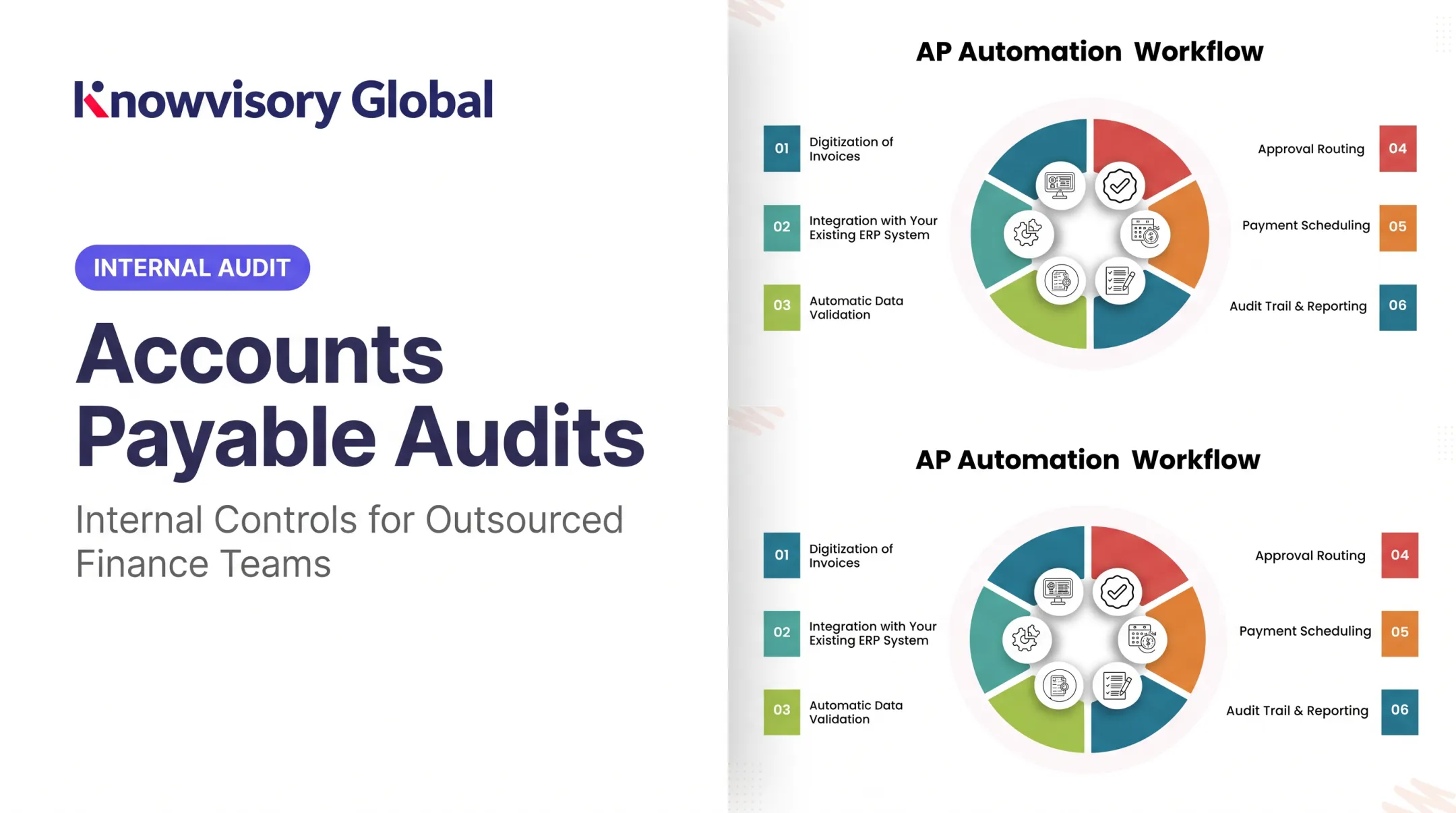
The AP process follows a predictable sequence, whether it's manual or automated:
- Purchase request or purchase order initiates the spend
- Receipt of goods or services confirms delivery
- Invoice intake captures the bill through a controlled channel
- Data capture and validation pulls key fields for review
- Matching compares the invoice against supporting documents
- Approval authorizes payment
- Payment scheduling and execution moves the money
- Accounting entry and reconciliation closes the loop

Standardizing Invoice Intake
Accept invoices only through a designated AP email address or vendor portal—not a scattered inbox. Every invoice needs these fields captured at minimum:
- Vendor identity and invoice number
- Invoice date and amount, including tax
- Payment terms and purchase order reference
- Bank information (verified, not just as-stated)
Two-Way and Three-Way Matching
Two-way matching compares the invoice against the purchase order. Three-way matching adds the receiving record, confirming the business actually received what it's being billed for. This single step catches most price discrepancies, quantity mismatches, and duplicate submissions before they become payments.
When something doesn't match, that exception needs an owner, a documented resolution path, and an escalation point if it isn't resolved within a set window. Leaving exceptions unassigned is how invoices sit unpaid for weeks.
Approval, Payment, and Closing the Loop
Authorization thresholds should scale with risk. A common structure routes standard invoices to a department manager, while anything above a set dollar amount, say $5,000, goes to the CFO.
After approval, schedule payments against due dates and run them through your chosen method. Post the entries to the general ledger, then reconcile against both the bank statement and vendor statements.
Best Practices for Managing Accounts Payable
Effective AP starts with a documented process. Software should reinforce that process later, not replace judgment.
- Standardize the policy. Define where invoices go, required documentation, coding rules, approval authority, and retention requirements in writing. A one-page policy prevents "who approves this?" confusion.
- Keep vendor master data clean. Verify legal names, tax details, and bank-account changes through an independent process—ideally a callback to a known contact, not a reply to the change request. Restrict who can create or edit vendor records.
- Use three-way matching for PO spend. Document an alternative path for legitimate non-PO invoices such as rent, utilities, or subscriptions. A simple checklist and shared approval log still work without procurement software.
- Schedule payments strategically. Weigh due dates, early-pay discounts, cash position, and vendor criticality. Paying too early ties up cash; paying too late risks penalties and trust.
- Improve vendor communication. Clear invoice-submission rules, prompt dispute responses, and documented changes to terms or banking details cut friction. PYMNTS Intelligence found in 2024 that 73% of executives say AP automation improves cash flow. Stronger visibility is what makes better payment-timing decisions possible.
Automation should reinforce these practices, not substitute for judgment. A small business can apply most of this with spreadsheets, shared calendars, and disciplined habits before ever purchasing a platform.
Internal Controls, KPIs, and Technology That Strengthen AP
Segregation of Duties
Wherever staffing allows, separate vendor setup, invoice entry, approval, payment release, and reconciliation across different people. Lean teams that can't fully segregate these functions should build in compensating reviews, such as a manager spot-checking a sample of payments each month.
This isn't a formality. The AFP's 2025 Payments Fraud and Control Survey found that 79% of organizations experienced attempted or actual payments fraud in 2024, with 73% of organizations under $1 billion in revenue affected. Invoice fraud rose from 14% to 24% year over year. Vendor bank-account changes made without independent verification remain a common entry point.

Practical controls include:
- Role-based access limiting who can approve payments
- Dual approval for higher-risk transactions
- Callback verification for any banking-detail change
- Duplicate-invoice checks before payment release
- Audit trails showing who approved what and when
Metrics Worth Tracking
| KPI | What It Tells You |
|---|---|
| Invoice cycle time | How long invoices sit before payment |
| Exception rate | How often invoices need manual intervention |
| Duplicate-payment incidents | Whether matching controls are working |
| Days Payable Outstanding (DPO) | How long the business takes to pay, on average |
| Discount capture rate | Whether early-pay opportunities are being used |
DPO in particular deserves context rather than comparison to a generic benchmark. A rising DPO could mean better cash management or could signal vendors aren't being paid on schedule; the difference matters.
Choosing AP Technology
For startups and SMEs evaluating tools, prioritize:
- Integration with your existing accounting system
- Realistic implementation effort for your team size
- Role-based permissions and a clear audit trail
- Total cost of ownership, not just the sticker price
Controls, KPIs, and the right stack work best together. When internal bandwidth is tight, partners like KnowVisory Global can run day-to-day AP with segregation of duties, exception tracking, and tool workflows already built in—so startups and SMEs get stronger controls without adding headcount.
How Startups and SMEs Can Improve AP Management
You don't need enterprise software to fix AP. Start with process, not platforms.
First 30 days — establish visibility and ownership
- Document the current process end to end
- Identify where invoices get stuck or lost
- Assign a single owner for AP
- Centralize invoice intake to one email or portal
- Clean up vendor master records
Next 60 days — strengthen controls and reporting
- Build a simple approval matrix by dollar threshold
- Apply three-way matching to higher-risk purchases
- Set a weekly or monthly review of open liabilities
- Document a reconciliation routine
By 90 days — evaluate automation based on real needs
- Review which repetitive steps genuinely justify a tool
- Weigh per-invoice cost against current volume
- Pilot with a subset of vendors before rolling out fully Those steps tighten the process. External support still makes sense when capacity cannot keep up:
- Growth outpaces internal capacity
- Books fall behind
- Month-end close keeps slipping
- Invoice volume grows faster than the team managing it Outsourcing accounting is common practice. The Small Business Administration notes that more than a third of small businesses outsource at least some operations, with accounting among the most frequently outsourced functions. KnowVisory Global's outsourced AP management covers invoice processing, payment reconciliation, vendor communication, and compliance support. Work follows US GAAP-oriented practices and integrates with tools like QuickBooks, Xero, and Bill.com. For a startup without a dedicated AP hire, that structure can close the gap between "we're falling behind" and a controlled, reportable process.

Frequently Asked Questions
What are 3-way accounts payable?
Three-way matching compares the purchase order, receiving record, and supplier invoice before payment. It flags price mismatches, quantity discrepancies, duplicate bills, or unauthorized purchases before money moves.
What is an accounts payable manager?
An AP manager oversees invoice processing, approvals, payment scheduling, vendor records, reconciliations, and AP reporting. In smaller companies, this can be a shared responsibility rather than a dedicated title.
Do I send invoices to AP or AR?
Supplier invoices that your business must pay go to AP. Invoices that your business sends to customers for collection belong to AR. Always follow the specific submission instructions the company provides.
What is the accounts payable process?
It runs from purchase or receipt of goods through invoice validation, matching, approval, payment execution, accounting entry, and reconciliation. Each step exists to confirm the payment is accurate and authorized.
Why is accounts payable management important?
It directly affects cash-flow visibility, financial record accuracy, vendor relationships, fraud prevention, and how quickly month-end close happens. Weak AP control creates costly errors that compound over time.
How can a small business improve accounts payable management?
Centralize invoice intake, assign clear approval ownership, keep vendor records accurate, and build a regular reconciliation habit. Add segregation of duties and automation gradually as volume grows.