Introduction
Hiring a senior developer in the US often takes months and six figures in salary before a single line of code gets written. Many founders and SME leaders hit the same wall: they need specialized skills fast, but a full domestic hire is slow, expensive, and hard to scale back if priorities shift.
That pressure is why more teams look offshore. But "offshore" covers a lot of ground, from a single contractor filling a gap to a fully dedicated team running your entire product roadmap.
This guide covers what offshore development actually means, when it makes business sense, and what it costs. It also walks through how to vet a provider and how to avoid the delivery and compliance headaches that sink these arrangements.
The short version: offshore hiring works best as a structured operating decision, not a hunt for the cheapest hourly rate. Get the model, the contract, and the onboarding right, and the savings follow.
Key Takeaways
- Hire offshore teams in another country through a provider that handles recruitment, payroll, and HR.
- Gain broader technical talent, flexible headcount scaling, and lower total employment costs.
- Lock in clear requirements, technical vetting, time-zone planning, and solid contracts.
- Compare total cost and business outcomes, not just headline hourly rates.
What Does It Mean to Hire an Offshore Development Team?
An offshore development team is a group of developers based in another country who work on your product, usually through a provider or employment partner that handles local hiring, payroll, and compliance. Depending on the arrangement, that team works exclusively on your codebase or splits time across client projects.
This differs from generic remote hiring. A remote hire might sit two states away. An offshore team typically operates in a different country, a different time zone, and under its own labor laws and holidays.
Dedicated Teams: Who Controls What
In a dedicated-team setup, you control the product roadmap, priorities, and day-to-day workflow. The provider handles the parts you don't want to run yourself:
- Recruitment and technical screening
- Payroll, benefits, and local HR administration
- Equipment and office infrastructure
- Replacement hiring if someone leaves
None of that happens automatically. It needs to be written into the contract, not assumed from the word "offshore."
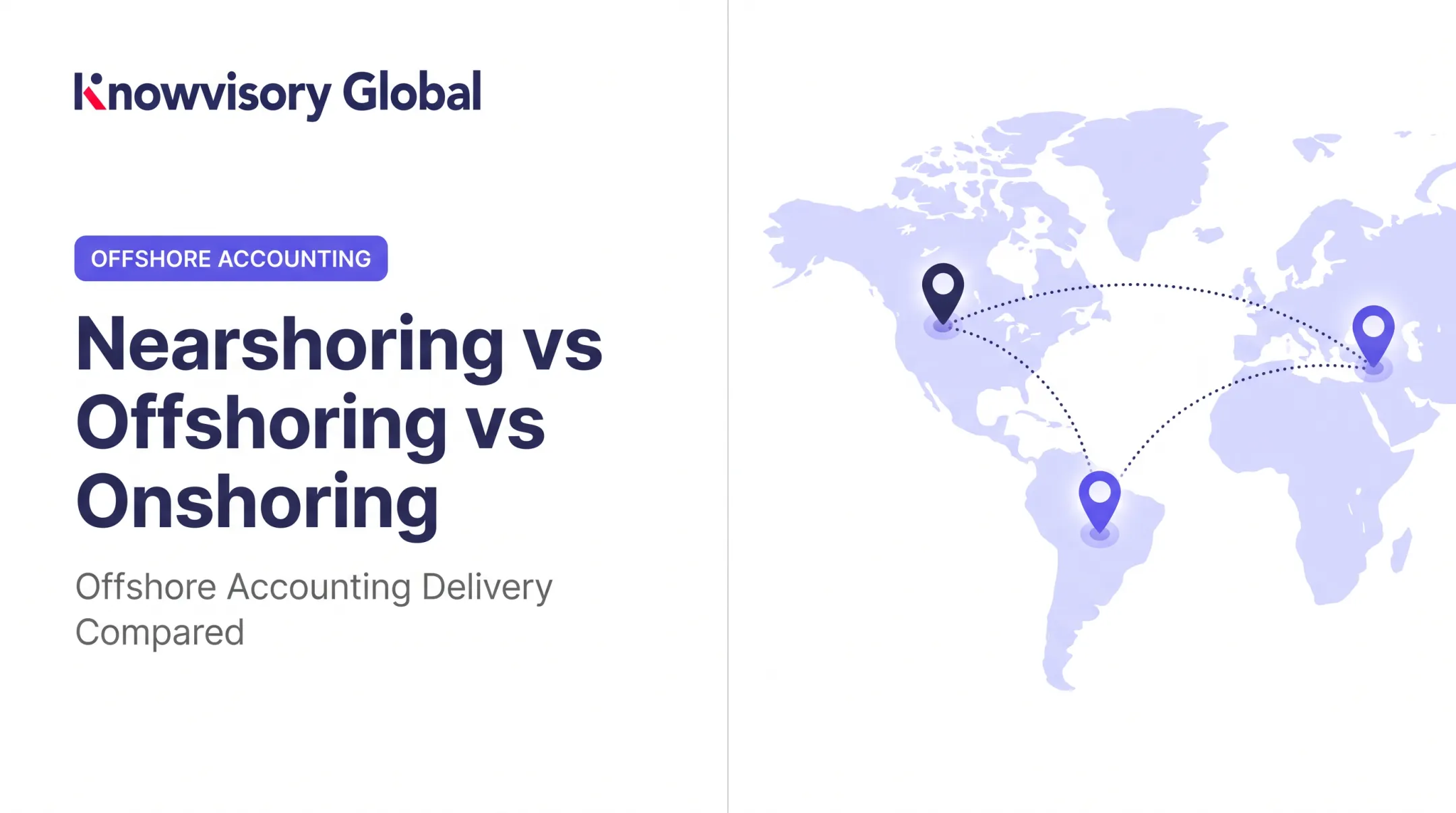
Offshore vs. Nearshore vs. Onshore
These labels describe geography and time-zone distance, not quality:
- Onshore – provider based in your own country
- Nearshore – provider in a nearby country with closer time-zone overlap
- Offshore – provider in a distant country, often with limited working-hour overlap
As one IBM application-services lead has pointed out, geography alone isn't the deciding factor. Production support benefits from same-time-zone responsiveness, while work like test-script development can move to a distant time zone without much friction (IBM/Nearshore Americas).
Roles You Can Build Offshore
Offshore teams commonly cover a wide range of technical roles:
- Front-end and back-end developers
- Mobile engineers
- QA specialists
- DevOps professionals
- Data engineers
- UI/UX designers
- Technical project managers
India's talent pool alone produces more than 1.5 million engineers annually and includes over 120,000 AI and machine learning professionals. That depth supports work from fintech products to AI-driven healthcare systems and supply chain analytics.
Why Do Companies Hire Offshore Workers?
Access to Specialized Skills, Faster
Local hiring for niche roles, like machine learning engineers or DevOps specialists, can take months. Offshore providers maintain pre-vetted talent pools, cutting time-to-hire significantly. This matters most when:
- A startup needs to ship an MVP on a fixed runway
- A legacy system needs modernizing but internal capacity is maxed out
- A feature launch needs extra hands for a defined sprint
Flexible Capacity Without Permanent Headcount
Offshore teams scale up for a launch and scale down once it's done. That flexibility supports seasonal demand and maintenance windows without the fixed cost of permanent US hires.
The Cost Case
Cost is usually the headline driver, and the gap is real. The US Bureau of Labor Statistics puts the median annual wage for US software developers at $133,080 as of May 2024, before benefits, payroll taxes, office space, and equipment (BLS). Offshore engagements typically run well below that fully loaded number. The exact gap depends on region, seniority, and what the provider bundles into the rate. They also cut related overhead:
- Recruitment costs
- Office and equipment spend
- Benefits administration
- Internal HR onboarding time
Time-Zone Coverage, With a Catch
A team working while your US staff sleeps can extend coverage and speed up cycle times on things like QA and bug triage. But large time-zone gaps cut both ways: without planned overlap hours, decisions stall waiting for the next business day. Build in a few shared hours and clear async handoffs, or the coverage benefit turns into a communication tax.
Don't Forget the Back Office
Scaling a technical team is only half the equation. As headcount grows, so does the complexity of bookkeeping, payroll, tax filings, and financial reporting. That back-office load sits outside software delivery and is worth solving deliberately. KnowVisory Global, for example, works with US startups and SMEs on outsourced bookkeeping, financial reporting, FP&A, and tax support. Finance operations often matter just as much once product and headcount scale at the same time.
Which Offshore Engagement Model Fits Your Business?
Not every offshore engagement looks the same. Picking the wrong model creates friction even when the developers themselves are excellent.
| Model | Who controls day-to-day work | Best fit |
|---|---|---|
| Dedicated team | You direct priorities; provider manages the team | Long-term product development with evolving requirements |
| Staff augmentation | You manage individuals directly | Short-term skill gaps or a delivery spike |
| Project-based outsourcing | Provider owns delivery against fixed scope | Well-defined deliverable with stable requirements |
| Build-operate-transfer | Provider builds and runs the team, then hands it over | Path to an in-house offshore entity |
Dedicated Development Team
Choose this when you're building a product over months or years, requirements will keep shifting, and you want the team to develop deep institutional knowledge of your codebase. You keep the roadmap; the provider handles recruitment, retention, and admin.
Staff Augmentation
This works when you need one or two specialists, fast, to plug into a team you already manage. It's a good fit for a defined skill gap, such as a React Native developer for a three-month push, rather than an entire function.
Project-Based Outsourcing
Pick this model when scope, acceptance criteria, and timeline are locked before work starts. It suits a self-contained deliverable, like a fixed-scope migration, where daily involvement isn't required.
Build-Operate-Transfer (BOT)
Use BOT when you want the partner to recruit and run the team for an agreed period, then hand over full ownership. It fits teams that eventually want an in-house offshore entity instead of an ongoing vendor relationship.
A Quick Decision Framework
Ask yourself:
- How long will this run? A short delivery spike points to staff augmentation; ongoing product work points to a dedicated team.
- How much internal management capacity do you have? Limited bandwidth favors project outsourcing or a dedicated team with a strong provider PM.
- How stable are your requirements? Fixed scope suits project outsourcing; evolving scope needs a dedicated team.
- How much daily control do you need? High control favors staff augmentation or a dedicated team.
- Will the team need to scale up or down? Frequent scaling favors a dedicated team over fixed-price projects.
- Do you want to own the team later? If yes, ask about a Build-Operate-Transfer path.

How to Hire an Offshore Development Team
Start With a Role and Project Scorecard
Before you contact anyone, build a scorecard you will reuse for shortlisting and interviews. Capture:
- Business outcomes (not only job titles)
- Technical requirements and seniority
- Team structure and expected deliverables
- Required collaboration hours and security needs
- First-90-day responsibilities
Direct Recruiting vs. a Specialist Partner
Recruiting directly means you own sourcing, international payroll, tax compliance, and replacement hiring. A specialist provider absorbs most of that in exchange for a margin. Compare based on:
- How much sourcing effort you can absorb internally
- Your appetite for international employment administration
- Access to a wider or narrower candidate pool
- Who handles replacements if someone leaves
Shortlist Providers on Evidence, Not Sales Pitches
Ask for proof, not pitch decks:
- Portfolio work in your tech stack
- Client references for similar-sized engagements
- Team retention and tenure data
- A clear description of technical screening methods
Weigh location factors the same way:
- Talent depth in the stack you need
- Time-zone overlap with your US hours
- Data-protection expectations
- Political and economic stability
Latin America often offers substantial overlap with US business hours. Eastern Europe and parts of Asia trade different mixes of technical depth and price. Conditions shift, so verify current regional data before you commit.
Check Security and IP Terms
Confirm the provider covers:
- Confidentiality agreements and IP assignment
- Least-privilege access and company-managed accounts
- Secure development environments
- Documented offboarding
If the provider sits outside the US, confirm they follow the data-protection rules that apply in that country—for example, GDPR-style frameworks in the EU or India's Digital Personal Data Protection Act.
Interview Candidates Yourself
Don't rely on the provider's screening alone. Run your own structured interviews and score:
- Technical depth
- Problem-solving under realistic scenarios
- Written and spoken communication
- Ownership and fit with your development practices
Lock Down Commercial and Legal Terms
Before you sign, lock down:
- Pricing structure and payment terms
- Notice periods and replacement policy
- Confidentiality and IP assignment
- Data access rules and security responsibilities
- Contractor-versus-employee status
- Dispute resolution procedures
Build a Real Onboarding Plan
A rushed first week costs weeks later. Cover at minimum:
- Product documentation and architecture access
- Coding standards and repositories
- Intro meetings with named internal owners
- First tasks scoped for early wins
- Feedback checkpoints at 30, 60, and 90 days

How Much Does It Cost to Hire an Offshore Developer?
What Drives the Price
Offshore developer pricing is not a single number. Rates usually move with:
- Country or region
- Role and seniority
- Technical specialization
- Engagement model and contract length
- Provider margin
- Benefits, equipment, and management overhead baked into the rate
Current Market Reference Points
Treat these as anchors, not universal prices. They shift by source, date, and what's included:
- US direct hire: $133,080 median annual wage as of May 2024, before benefits and overhead
- Clutch-listed development firms: about $24–$49/hour as a company rate, not a guaranteed offshore or fully loaded price (Clutch)

Always ask whether a quoted number is a salary, an hourly rate, or a fully loaded provider price. The three aren't interchangeable.
Total Cost of Ownership Beats Headline Rates
Compare direct hiring, a dedicated-team provider, staff augmentation, and project outsourcing on total cost, not the sticker price. Costs that rarely appear in a headline quote include:
- Onboarding and ramp-up time
- Overlap-hour premiums
- QA and rework from miscommunication
- Compliance and legal review
- Management time spent coordinating
Why the Cheapest Bid Often Costs More
Weak technical screening, high turnover, and thin documentation erase savings fast. Replace a developer after two months and you pay onboarding twice, plus the schedule slip.
Before you sign, ask for an itemized proposal that covers:
- What's included and excluded
- How rate changes work over the term
- Who pays for ramp-up or replacement time
What Are the Main Risks of Offshore Development Teams?
Communication and Time-Zone Friction
Coordinating across distant time zones is harder than it looks on paper. Microsoft Research found that offsets of roughly eight hours or more make real-time collaboration genuinely difficult for globally distributed teams (Microsoft Research). Reduce the friction with:

- Agreed overlap hours
- Written requirements
- Documented decisions
- A predictable meeting cadence
Quality and Accountability Gaps
Without measurable standards, quality slips quietly. Put these controls in place:
- Clear acceptance criteria
- Code review standards
- Automated testing
- Regular sprint reviews
- One accountable product or engineering owner on your side
Security, Compliance, and IP Exposure
Confirm contracts cover confidentiality, IP assignment, and controlled access before work starts. Also require:
- Secure collaboration tools
- Documented onboarding and offboarding
- Legal review where the engagement involves regulated data
Cultural and Integration Gaps
Offshore developers included in planning, stand-ups, retrospectives, and code reviews outperform those treated as disposable capacity. Include them in recognition and informal team moments too. It costs nothing and pays off in retention.
Monitoring the Relationship Over Time
Track these signals over time:
- Delivery quality
- Defect trends
- Cycle time
- Retention
- Documentation completeness If any of these drift for more than a sprint or two without explanation, treat it as an early warning sign.
Frequently Asked Questions
How much does an offshore developer cost?
Cost varies by region, seniority, specialization, and engagement model. Always check whether a quoted number is a salary, an hourly rate, or a fully loaded (all-in) provider price before comparing options.
What does it mean to hire offshore?
Hiring offshore means engaging developers in another country, either directly or through a provider that handles local employment. Nearshore uses a nearby country with more time-zone overlap; onshore stays in your own country.
Why do companies hire offshore workers?
Companies hire offshore to access specialized skills, scale capacity flexibly, recruit faster, and often reduce total employment costs. None of that happens automatically; it depends on solid governance and communication practices.
What is the difference between an offshore development team and staff augmentation?
A dedicated offshore team is a coordinated, longer-term unit managed largely by the provider. Staff augmentation places individual specialists on a team you manage directly to fill a skill gap or capacity spike.
How do I choose the right offshore development partner?
Check technical screening methods, client references, developer retention, time-zone overlap, and security and IP protections. Confirm pricing is transparent and ask how replacements are handled before signing anything.