BOT

How to Pick a BOT Partner That Drives Global Growth

Building Success Together: How to Pick a BOT Partner That Drives Global Growth

Setting up your Global Capability Center (GCC) through build-operate-transfer model in India is a smart way to expand and strengthen your business operations. It gives you access to a large talent pool, lower operating costs, and round-the-clock productivity. But here’s the truth — the success of your offshore team largely depends on the service provider you choose to partner with. Your local partner is not just a vendor that helps you get started. They’re the ones that lay the groundwork for what will eventually become your own offshore center. From finding the right office space and hiring skilled professionals to managing compliance, payroll, and ensuring cultural alignment — your offshore partner handles the details that can make or break your setup. A strong local partner can make your transition from “build” to “operate” to “transfer” feel seamless – that’s why partnering with the right one is important. |Also read: Build-Operate-Transfer (BOT): A Strategic Way to Build Offshore Operations Without Losing Control| Why Choosing the Right Service Partner Matters Seamless Local Expertise Every country has its own laws, tax regulations, labor rules, and government policies. Staying compliant with them is important. A seasoned local partner understands the local landscape inside out. From registering your offshore unit to setting up processes, handling payroll taxes and managing data privacy, they handle everything for you. Their expertise helps you save time, prevent legal missteps, and keep your operations compliant with the law – right from the start. Faster Access to Skilled Talent India’s biggest BOT advantage is its rich and diverse talent pool. As of late 2024-2025, India has over 400,000 Chartered Accountants (CAs), approximately 100,000 CMAs, and produces around 1.5 million engineering graduates annually. But tapping into that talent efficiently requires local market understanding. An experienced partner has established recruitment networks and HR systems in place. They can help you find and hire accountants, IT specialists, engineers, and customer service executives who accurately meet your business requirement. They also take care of the onboarding process, handle training, and help offshore resources align with your company’s culture. Operational Stability Whether you operate in-house or run an offshore unit, everyday operations involve managing people, tracking performances, ensuring quality – all while meeting deadlines and keeping costs under control. A BOT partner manages the entire operation for you. They train your team, monitor KPIs, and fix operational challenges to keep your processes running smoothly, without a glitch. Regulatory and Legal Stewardship India’s changing legal landscape requires more than basic knowledge. The right partner ensures your business stays compliant with labor laws, data protection rules, company structure requirements, and statutory filings. This helps reduce legal risks and keeps your operations running smoothly from day one. Speed and Agility Markets move quickly, and your GCC partner needs to keep up. From legal setup and infrastructure to hiring the right talent, speed matters. Choose a partner who can get your operations up and running within 60 to 90 days—without cutting corners on quality or compliance. Hassle-Free Cultural Alignment Culture matters more than most people think. Every country has its own way of working – and it is important that your teams (onshore as well as offshore) align. A good local partner acts as a bridge between your headquarters and your offshore team. Through regular orientation sessions, transparent communication, and cultural alignment, they help create a unified company culture even across time zones. Cost Transparency A strong partner offers full transparency into how your investment is being used. A clear cost-plus model means no hidden charges, no inflated markups, and no surprise expenses. This gives your leadership team better control over budgets and helps ensure your spending aligns with the value you receive. Complete Risk Management No business expansion is without risk. From data security and confidentiality to employment laws and vendor contracts — there are multiple areas where non-compliance can lead to serious issues. An experienced BOT partner has established systems and certifications in place. They can help you protect sensitive information, manage audits, and keep operations compliant with both local and international regulations. Working with them not only reduces your exposure to risk but also builds a strong foundation for smooth ownership transfer when you’re ready to take over. A Smooth and Predictable Transfer Sooner or later, you want your global capability center to function as an extension of your in-house team. This means taking complete control over the people, processes, assets, and operations. A reliable partner makes this phase remarkably smooth. Documentation, systems, and responsibilities transition naturally. They make sure you get a fully functional, independent center that’s ready to scale — not a setup you have to rebuild. Strategic Enablement and Scaling Support A GCC is not a one-time setup—it grows as your business grows. The right partner supports you beyond the launch, helping improve processes, upgrade systems, and align your center with your long-term digital transformation goals. |Expert Insight: BOT for Global Expansion: When It Works Best (and Why)| What to Look for in a BOT Partner To make your GCC run smoothly, it is important to find a reliable BOT partner. Here are a few things that you must check before finalizing one: Taking a bit of extra time here will save you a lot of trouble later. A good BOT partnership leads to fewer delays, fewer surprises, and a much smoother experience overall. The Long-Term Value of a Right Partner When you pick the right local partner, you’re not just outsourcing setup work — you’re laying the foundation for sustainable global growth. The benefits go far beyond cost savings. You gain: Ensure a Smooth Transfer, Not a Stressful One Setting up your GCC in India using the BOT model can be a game-changing move — but only if it’s done with the right partner by your side. A dependable BOT partner builds your team with confidence, operates your processes efficiently, and seamlessly transfers the ownership when you are ready. So, before you begin your GCC journey, invest the time to find a


Read more
gcc

Step-by-Step Guide to Creating a Global Capability Center in India

Global Capability centers (GCCs) are no longer viewed as mere cost-cutting tools. Today, they are seen as strategic hubs that ensure innovation, capability and competitive advantage. In India, most GCCs operate under the “Build-Operate-Transfer” (BOT) model. BOT offers companies a proven, risk-free route to global migration. In this guide we’ll walk through what a GCC center is, how to set it up step-by-step using BOT model, the main challenges, and best practices to succeed. By the end of this blog, you will have a clear blueprint to create your GCC center in India — a center which evolves from being an operational presence to a strategic asset. |Also Read: Why India is a Preferred Destination for a GCC Center| Several factors make India a compelling choice for setting up a BOT/GCC center: Talent and Skills India produces millions of STEM graduates every year, and has a large pool of engineers, data scientists, analytics experts, product engineers, etc. This gives you instant access to a deep talent pool. Cost Efficiency While cost-arbitrage is one of the benefits, India’s proposition now is more than just cheaper labor. When you open a GCC center in India, you get a mix of quality, scale, and cost advantage. Mature Infrastructure & Ecosystem India has multiple technology hubs, established IT parks, Special Economic Zones (SEZs), data center support, co-working spaces, and service partners. Favorable Models & Government Support The Indian regulatory environment has become more accommodating to global delivery centers. Incentives, SEZ benefits, tax frameworks, and work-permit/hiring frameworks have simplified in recent years. Strategic Shift from Cost to Innovation Indian centers are no longer only about back-office or repetitive tasks. They increasingly lead product engineering, AI/ML, analytics, digital platform builders. This adds strategic value. For example, India now hosts over half the world’s global capability centers, which in itself is a big feat. In short: when you build your BOT center in India, you’re not just getting a “delivery outpost” — you’re positioning a strategic innovation node for your organization. |Also Read: Why Global Businesses Are Turning to India for Build-Operate-Transfer (BOT)| Step-by-Step Guide to Creating a Global Capability Center Using BOT Model Setting up a Global Capability Center (GCC) in a foreign country is like charting an unknown territory. You need the right people, processes, and infrastructure — and most importantly, the right local partner who understands the regulatory framework and helps you stay compliant. There are multiple ways to open your global capability center in India. Find out about each of them and choose the best offshore delivery model as per your need: Captive / wholly owned GCC from day one: In this model, you set up the entity, recruit, and operate yourself. While it offers higher control, the risks are also higher and it might take you longer to set up the entire process. BOT (Build-Operate-Transfer): Here, a local partner builds and runs the center in the initial phase. Once everything is up and running, you take over the control. The model offers lower initial risk, faster entry, and significant cost savings. Hybrid / Joint model: In this offshore delivery center, some parts are owned by you, while other are outsourced. It gives a mix of control and flexibility. Managed services/ Outsource model: You simply outsource certain functions instead of creating a full captive center. Offers lower control but significant cost savings compared to other models While each model comes with its own pros and cons, the BOT model stands out as the most balanced approach. This model includes a 3-step process that includes:   Phase 1: The Build Phase The Build phase focuses on laying a solid foundation — defining the purpose, selecting the right model, conducting feasibility studies, ensuring compliance, and setting up your infrastructure and team. Step 1: Defining Purpose & Scope The process begins by evaluating your goal: Why you are setting up the GCC in India. This step shapes your strategy, structure, and future transition plan. Some questions to answer include: What business functions will be handled by your GCC unit: product engineering, analytics, finance and accounting, HR, or platform services? What KPIs and outcomes do you expect: cost savings, speed to market, global capability, IP creation, or anything else? What is the desired time frame and scale (e.g., 100 seats vs 1,000 seats)? Do you want to start lean and scale gradually, or go full-scale immediately? This will help your BOT partner determine your operating model, governance, and transition strategy. Step 2: Conducting Location Analysis Selecting the right location in India is key. A BOT partner can help you score the right location for GCC setup in India – Bengaluru, Hyderabad, Pune, Chennai, or Gurugram. The right city can influence not just operational efficiency but also your ability to: Attract and retain top talent Seek benefits from the available infrastructural facilities Leverage local incentives and SEZ benefits, including tax rebates, simplified compliance procedures, and ease of doing business. Manage operational costs effectively while ensuring scalability As part of location analysis, the BOT partner also assesses the risks – like the attrition rates in the city, competition for talent, regulatory or tax changes, and the potential impact of infrastructure disruptions. |Also read: 7 Biggest Challenges in Setting Up a Global Capability Center (GCC) – and How to Overcome Them| Step 3: Legal Entity Setup & Compliance Once the location is fixed, the BOT partner helps you choose the right legal entity for your GCC and ensure compliance right from the outset. Key actions include: Deciding the entity structure (private limited, subsidiary, branch, liaison office) – often a wholly-owned subsidiary is chosen. Working around legal and regulatory compliance. Reviewing employment laws: Labor law compliance, statutory contributions (Provident Fund, Employee State Insurance), local state compliance. If using SEZ, special economic zone or IFC (international financial services center) zone, understanding the benefits, conditions, tax incentives (for example, certain exemptions for GCCs in IFC/GIFT City), and more. The BOT partner does all the heavy-lifting for you, helping you build compliance and

Read more

Build-Operate-Transfer (BOT): A Smarter Way for Small Businesses to Scale Their Operations

Growing a small business is exciting, but growth brings inherent stress. You not only have to manage more orders, but also juggle in-house books, accounts, and payroll to stay compliant with changing IRS laws. One mistake, and everything comes crashing down. That’s why most business owners outsource their critical functions like accounting and bookkeeping to third-party service providers. It helps them gain access to professional expertise without the cost and hassle of hiring an in-house team. But outsourcing often makes business owners lose control, leaving them worried about whether everything is being handled exactly the way they want. That’s where Build-Operate-Transfer (BOT) comes in. It offers them the best of both worlds: professional support and full control over their offshore team — something every business owner wants. That’s why, today, U.S. companies — big and small — are using BOT to build offshore teams and scale smoothly. Google, IBM, Amazon, Accenture, Cisco, Intel, Salesforce, and Target are just some of the examples of companies that are leveraging the BOT model to build their global capabilities. What is a BOT Model and How Does It Work? BOT, short for Build-Operate-Transfer, refers to an offshore hiring model where a service partner helps you set up and run a team. They build the system for you, hire staff, train them, and run the operations. Once everything is running smoothly and you are ready, the ownership is gradually transferred to you. Think of it as renting a fully furnished apartment before buying it. You move in, figure out how to live there, and when you’re ready, you buy it. No surprises. No expensive mistakes. And there’s another perk, too. Your provider can run the processes for you as long as you want. You get professional support without being tied down, and you can step in whenever you’re ready. Why are Small Businesses Turning to BOT? BOT comes with plenty of advantages. Here are a few worth noting: Lower risk – Expanding into new markets or operations can be risky. BOT lets you experiment safely. Your partner provides structured guidance, so mistakes are caught early and don’t lead to expensive problems. Lower upfront costs – Hiring and training a new team from scratch is expensive. With BOT, you spread those costs over time. You pay for setup and expertise gradually instead of all at once. In fact, after the transfer, you get to manage the costs the way you want. Faster market entry – Offshore partners know the local market, regulations, and processes. They help you start operations faster, all while staying compliant. Built-in expertise – Finding skilled finance, accounting, or operational talent can be tough. BOT gives you instant access to professionals who already know the process. Flexible support – And here’s another perk: your provider can keep running the processes for you as long as you need. You get professional support without being tied down, and you can step in whenever you’re ready. That’s why they say the BOT model is not just about saving money. It’s about saving headaches, time, and sanity. It’s a solid option if: You’re entering a new market and don’t know the local rules. You need specialized skills that are hard to hire locally. You want to test the waters before committing big resources. If most of these sound familiar, BOT might just be what you’ve been looking for. How to Choose the Right BOT Partner If you want to successfully set up your global operations, it is important to partner with the right provider. So always look out for a partner who: Understands your sector, whether that’s accounting, retail, or tech. Has a proven track record of successfully setting up global capability centers for US firms. Offers scalable solutions that give your business to grow at your pace. Provides clear reporting, regular updates, and visibility into day-to-day operations so you never feel out of the loop. Ensures a smooth transfer process through a structured handover plan. Common Pitfalls to Avoid Every business model has its challenges, and BOT is no different. Here are some mistakes to avoid: Rushing the transfer: Moving ownership too soon can backfire. Make sure your team is fully trained and ready before taking over. Overlooking cultural fit: Make sure you choose an offshore team that can seamlessly blend into your company culture. Language proficiency and collaboration habits matter. Ignoring compliance: A good BOT partner should know local regulations inside and out. So partner with one that helps you maintain due diligence without any stress. Choosing cost over quality: Cheap providers may cut corners. It’s better to invest in a partner who delivers reliable systems and people. Treat BOT like a partnership, not just outsourcing. The better the planning, the smoother the handover. BOT is the Future of Outsourcing! Make the Most of It Markets are more connected than ever. Small businesses often try to reach out for opportunities that are reserved for big corporations. BOT levels the playing field. It lets startups grow smartly, test new ideas safely, and scale without making costly mistakes. Scaling a small business is tough. Too cautious, and you miss opportunities. Too aggressive, and you risk everything. BOT gives you the time, structure, and support you need so that growth happens steadily – with lesser risk and fewer headaches. For founders wondering how to expand without going broke or burning out, BOT might just be the safety net you need. It’s not just a model. It’s a smarter way to go global.

Read more
Why Global Businesses Are Turning to India

Why Global Businesses Are Turning to India for Build-Operate-Transfer (BOT)

Building a global workforce and expanding across borders has always been a dream of every business owner. More markets clearly translate into more customers and more growth.  But let’s be honest – the process is rarely as simple as it sounds. Between setting up legal entities, finding office space, building teams, and navigating compliance, most leaders realize expansion is a marathon they didn’t train for.  Outsourcing used to be the “shortcut” till now. You sign a contract, hand over the work, and let a vendor take care of it all. For a while, that worked for most businesses. Costs went down, operations scaled, and the internal teams found some breathing room. But there was a catch – outsourcing often came with loss of control. Processes started feeling foreign, communication slowed down, and suddenly, your own business didn’t feel like yours anymore.  That frustration led to the development of a more dependable global expansion model – the Build-Operate-Transfer (BOT) model. It’s like a middle path between outsourcing and building from scratch – where a partner sets up your offshore center, handles recruitment, infrastructure, payroll, and daily operations, and then, once you are fully ready, hands over the complete operations to you. The team, the process, and the infrastructure become yours.  The BOT model reduces risks, speeds up entry into new markets, and provides a structured pathway to building global capacity. With its multitude of benefits, the model quickly gained traction.  And when it comes to building global capacity, India has always been a frontrunner. The reasons are clear and backed by numbers. Let’s look at them one by one. 1. Large Talent Pool Every year, India produces more than 1.5 million engineers and thousands of finance and IT graduates. In fact, currently India has around 4.85 lakh registered CAs, and the number is rapidly growing.  This makes the country a hub of highly skilled talent. Twenty years ago, most offshore teams in India focused on call centers or basic IT services. Today, Indian professionals are building products for fintech, designing AI-driven healthcare systems, and running global supply chain analytics.  With over 120,000 AI and machine learning professionals and more than 185 dedicated AI/ML centers of excellence, India is no longer a place for entry-level coding or back-office operations; it’s the destination to build your global workforce. 2. Cost Efficiency Without the Compromise Even with rising wages, India offers 40–70% lower operating costs compared to Western markets. Salaries, infrastructure, and ongoing expenses are simply more affordable —without sacrificing quality.  But it’s not just about paying less. The build-operate-transfer services allow you to own the value you build. Instead of spending millions on outsourcing contracts year after year, companies can build their own capability centers — making a swift shift from renting services to owning operations – at an affordable price point.  3. India’s Growing GCC (Global Capability Center) Ecosystem India is often called the “GCC Capital of the World.” According to the Nasscom report, over the past 5 years, the number of GCCs in India has crossed 1,700 by 2024, employing 1.9 million people and generating $64.6 billion in revenue.  And this is not slowing down. By 2030, the market is expected to reach $100 billion, employing 2.5 million professionals.  For BOT players, this scale definitely matters. A thriving GCC ecosystem means better infrastructure, investor-friendly policies, and a thriving talent pipeline ready to step in and support complex operations and drive innovation. Whether you’re in retail, banking, aerospace, or healthcare, chances are your competitors already have an offshore team in India. 4. Time Zone Advantage Another benefit of setting up a Build-Operate-Transfer services center in India is the time zone advantage. The U.S. and India operate in different time zones. So, while you sleep, your team in India will be pulling up reports and getting analytics and insights ready for you to work on. This translates to round-the-clock productivity – not just late-night customer support.  Many companies now design their workflows so that when the U.S. team signs off, the Indian team picks up, keeping the projects moving 24/7. 5. Strong Policies and Government Support Setting up operations in a new country can be tricky – unless there’s an ecosystem already built for it. The Indian government has rolled out various initiatives and policies to support the growth of global businesses in the country.  India has the lowest corporate tax rates for new units in Asia.  There are various Special Economic Zones (SEZs) and IT parks that provide tax breaks, high-speed connectivity, and plug-and-play infrastructure to global players.  States like Karnataka and Telangana provide infrastructural support and strong financial incentives for setting up GCC centers in India. 6. World-Class Infrastructure in Tier-1 and Tier-2 Cities India has been making steady moves to make itself a business-friendly BOT location. Bengaluru, Hyderabad, and Pune are already popular locations for BOT model setup. But now, tier-2 cities like Coimbatore, Visakhapatnam, and Jaipur are also stepping up.  There are numerous GCC-friendly policies in states like Karnataka, which houses over 30% of India’s GCCs.  Emerging tier-2 cities like Visakhapatnam and Coimbatore are also becoming popular offshore hubs.  In fact, at least 115 new GCCs are expected to come up annually by 2030, with improved infrastructure and favorable policies   7. Shift From Cost to Value Today, nearly 86% of build-operate-transfer centers in India can handle advanced work like data analytics, financial planning and management, marketing, legal processes, and R&D. Companies are treating these centers not just as support units, but as possible revenue streams (profit centers).  That shift is huge. It gives companies the confidence to set up innovation hubs in India that not just support their existing process but also directly boost their global bottom line.  8. Building Resilience in Uncertain Times If the last few years have taught us anything, it’s that disruptions can happen anytime —pandemics, supply chain breakdowns, geopolitical tensions we’ve seen them all. Companies that spread operations across regions are better equipped to adapt.  With a BOT center in India, U.S. businesses

Read more
BOT

BOT vs. Staff Augmentation in Accounting: Choosing the Right Model for Your Business

Today, most U.S. businesses are under constant financial pressure. Accountants in the U.S. are in short supply, and the ones available don’t come cheap. With it comes constant tax changes, GAAP updates, and compliance rules that make it difficult for business owners to manage finance functions in-house.   To overcome these challenges, around 70% US firms turn to offshore delivery partners in India to scale their accounting operations efficiently.  The reasons are many. For example,  59% of U.S. businesses outsource work to reduce costs and focus on core tasks  57% cite increased productivity and access to skilled talent as their main reason  And this trend isn’t slowing down. In fact, by 2028, the global finance outsourcing market is expected to reach $93.2 billion, with India being the leading hub.  That said, “outsourcing” doesn’t look the same for every business; multiple models exist. Yet two of the most popular approaches that companies consider to strengthen their operations are:  Build-Operate-Transfer (BOT) model and  Staff Augmentation  Both help US firms close the talent gap at affordable prices while streamlining their financial operations without overhead expenses.  What is Staff Augmentation? Staff Augmentation is an outsourced accounting model that allows you to “rent” experienced accountants and bookkeepers from a service provider to extend your in-house service capabilities. It allows you to instantly expand your team without adding permanent headcount. The accountants technically belong to your service provider, but you decide their tasks and manage their output.  Example: A CPA firm in New York needs extra tax preparers during tax season. The company chooses staff augmentation. The company gains immediate support without committing to permanent hires.  Advantages: Speed — teams can be onboarded in a matter of days  Flexibility — scale up or down as projects demand  Zero HR or payroll headaches overseas  Plug-and-play expertise for audits, tax prep, or bookkeeping   Where It Falls Short:  Costs add up if it becomes a permanent solution  Company culture and policies don’t always match  Critical knowledge gap when an employee exits/ contract ends  What is the Build-Operate-Transfer (BOT) Model? BOT is a strategic, long-term team-building model that allows you to build, operate, and own an offshore team without upfront costs or investment. Here, an outsourcing partner builds and manages an offshore accounting team, handling recruitment, HR, compliance, and IT. Once stable, the team is transferred to you as a “fully owned offshore center” that works as per your company policies, follows your team culture, and seamlessly integrates into your existing finance operations – just like an extension of your U.S. office.  Advantages: Long-term savings — no vendor markup once the team is yours  Control — full say in hiring, training, and compliance  Scalability — structured growth instead of ad hoc hiring  Security — data, processes, and IP stay in-house   Challenges: Requires 2–3 months for setup and stabilization  Example: A Fortune 500 company in New York uses a BOT to establish a 200-member offshore accounting hub in India. After two years, the team transitions fully under their ownership, reducing operational costs by 40% compared to U.S. hiring.  Comparing BOT and Staff Augmentation Models Why Companies Choose Staff Augmentation CPA firms and mid-sized companies often choose staff augmentation to fulfill their immediate, short-term project needs. It gives them the:  Speed and flexibility they needed to plug their skill gaps  Ability to manage seasonal workload, especially during busy tax seasons  Access to specialized expertise on demand   Up to 40% reduction in hiring and training costs, since resources are already pre-vetted by the provider  Scalability to ramp teams up or down based on client projects and filing deadlines  Lower risk compared to permanent hires, as engagements can end once the project is complete  Why Companies Choose BOT  Larger CPA firms, fast-growing accounting practices, and mid-sized companies planning for global expansion often choose the Build-Operate-Transfer (BOT) model. It gives them the:  Long-term cost advantage as they own their offshore accounting center after the transfer phase  Direct control over teams, culture, and processes, ensuring consistency with U.S. operations  Ability to build specialized offshore capability in areas like accounting, bookkeeping, payroll, tax preparation, and compliance reporting  Reduced operational risk during the initial setup since the partner handles recruitment, HR, IT, and compliance  Scalable workforce planning, enabling structured growth rather than ad hoc hiring  Stronger data security and IP ownership, as all compliance and governance eventually align with the client’s framework  Sustainable knowledge retention, since expertise stays within the client’s owned offshore center long-term  Which Model is Right for You?  Both BOT and staff augmentation are proven models helping U.S. businesses overcome the talent crisis and cost pressures in accounting. The decision ultimately depends on whether you want speed and flexibility or long-term ownership and strategic control.  Choose Staff Augmentation if you need quick, flexible, short-term support to meet seasonal demands or project surges. But it often comes with hidden costs, communication barriers, and a lack of ownership. The Build-Operate-Transfer (BOT) model, on the other hand, changes the equation by offering a balanced approach where you get an offshore unit that’s truly yours. Since the resources, infrastructure, and teams are directly managed by you, you get better control and savings than traditional outsourcing.  The Build-Operate-Transfer (BOT) model, thus, gives U.S. firms a clear edge over traditional outsourcing.   Which model should you choose? The one that aligns with your business vision, growth stage, and long-term goals.  Want to explore the right model for your firm? Schedule a discovery call to know how we can help you build a cost-effective, future-ready global accounting team – at the most cost-effective price point. 

Read more

From Service Partnership to Ownership: How BOT is Redefining Outsourced Bookkeeping for U.S. Companies

Bookkeeping is a repetitive but important task. Every invoice, expense, and payment must be recorded accurately. This takes a lot of time and mental space for busy business owners.  To overcome the challenge, for many years, outsourcing was the first option for U.S. companies that wanted to reduce costs and get bookkeeping work done faster. It worked well in the short term. A business could hire an external team, pay them per hour or per project, and keep the internal team small.   Outsourced bookkeeping services came with many advantages. It helped companies:  Cut down infrastructure and overhead costs.  Avoid the hassle of hiring and training in-house teams.  Get access to skilled accountants offshore quickly and as per their needs.  But along with these benefits came the problems:  No direct control – The outsourcing firm decided how people worked, not you.  Hidden costs – What started as cheap often grew expensive over time.  Data risks – Sensitive financial records were not always fully safe.  Lack of commitment – The offshore team worked for many clients, not just you.  This made many business owners think, “Is outsourcing really helping us grow, or are we just surviving with it?”  To overcome these limitations, today, most business owners are switching to the Build-Operate-Transfer (BOT) model. Instead of “renting” a service, companies have now started “owning” their offshore teams – without the hiring and compliance risks.  What is the BOT Model?  The BOT model stands for Build – Operate – Transfer. A strategic model in which  An offshore partner sets up a dedicated bookkeeping or accounting team for you. They handle the entire hiring, infrastructure, and initial setup process. This is called the Build Phase.  Next is the Operate phase, in which the partner manages the daily operations for you. They handle the payroll, compliance, and training, making sure your team works as per the norms set by you.  Once you are ready, the entire team, systems, and processes are transferred to you. You become the full owner. This is called the Transfer Phase.  This way, U.S. firms start with outsourcing but end up owning the entire process.  Why U.S. Companies Are Moving Toward BOT  Global Talent Shortage – Finding skilled bookkeepers in the U.S. is tough and expensive. BOT provides hassle-free access to a global talent pool, with ownership in the future.  Rising Outsourcing Costs – Outsourcing was cheap 10 years ago, but due to a rise in demand, the costs have increased exponentially. BOT creates more value per dollar.  Need for Control – Finance data is sensitive. BOT allows companies to bring bookkeeping back in-house (even if offshore).  How is BOT Redefining Bookkeeping Services for Small Businesses  The beauty of BOT is that it mixes the low-risk start of outsourced bookkeeping with the long-term control of having your own team. 1. Helps US Businesses Move from Cost Savings to Asset Building With outsourcing, money goes out every month, yet nothing is owned. BOT helps you build a future team that later belongs to you. It is like renting a house vs. paying EMIs to own one. 2. Gives Firms More Control, Less Dependency Instead of depending forever on a vendor, BOT lets you take over. You can set your own processes, data rules, and quality checks, and make your offshore team work as an extension of your in-house resources. Your processes stay aligned and in total control. 3. With BOT, Talent Retention Becomes Easy In outsourcing, there’s constant movement of resources. In BOT, the team is built for you from the start. When transferred, you can keep the same trained people. 4. You Can Scale Your Team Without Fear Outsourcing vendors may not always scale at your pace. BOT teams are designed for your growth. If your bookkeeping doubles, you can smoothly expand your team too. 5. Low Risk of Compliance Since BOT partners handle compliance during the operation stage, U.S. companies do not face legal or tax risk abroad. By the time of transfer, everything is smooth and compliant.   A Simple Example  Let’s say a mid-sized retail company in Texas outsources bookkeeping services to a firm in India. For the first year, it works fine. Costs are low, but the U.S. managers often face delays in reports, and sometimes new staff join without notice.  Now, they switch to the BOT During the first month, the partner sets up a dedicated 10-person team for them.  For the next few months, the partner manages the team, handles payroll and HR, but the team works only for the retail company.  Once the process has been successfully established, the entire team is transferred to the U.S. company. They now own the offshore center, the staff, and even the systems.  The Challenges of the BOT Model  BOT is powerful, but it also comes with challenges:  Upfront planning needed. You must be clear about your growth goals before starting. Choosing the right partner is equally important.  Longer timeline. Outsourcing is quick; BOT takes time for full transfer. Hence, proper planning is important.  Cultural alignment. The offshore team needs training in your work culture.  With strategic planning and the right support, these challenges can be overcome without any hassle.  The Future of Outsourced Bookkeeping is BOT  The trend is clear: U.S. firms are slowly moving away from traditional outsourcing. They want more ownership, better security, and a long-term plan. BOT answers all three needs.  It does not mean outsourcing will vanish. Small businesses with short-term needs still find benefit in partnering with an outsourcing service provider. But for companies looking to scale globally and build lasting finance teams, BOT is becoming the smarter choice.  After all, offshoring is not just about cost anymore; it is about building future-ready finance teams that belong to you.  So the real question is not whether to outsource or not. The real question is: Do you want to rent your bookkeeping forever, or do you want to own it someday? 

Read more

BOT for Global Expansion: When It Works Best (and Why)

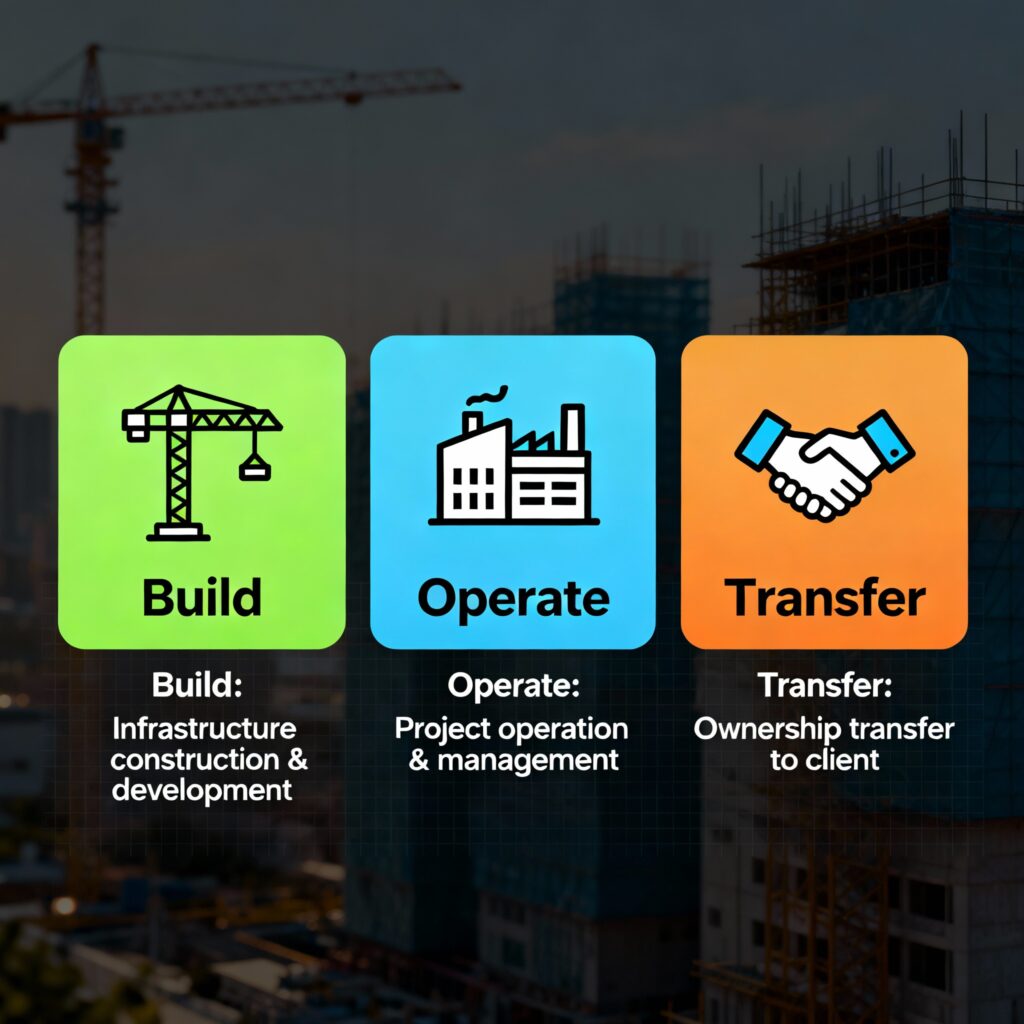
When you run a business, expansion comes naturally. New customers, bigger opportunities, and higher growth potential – that’s obviously on the wish list of every U.S. business owner.  But building a bigger brand means bigger teams. And that’s where the challenges begin. Finding the right talent is tough. Infrastructure and training costs quickly add up. And maintaining control over operations while trying to scale is not easy.  Traditional outsourcing often looks like the most convenient solution, but it comes with trade-offs.  More than 70% U.S. companies outsource at least some parts of their operations, yet many remain dissatisfied with the outcomes. The reasons are clear:  38% struggle with communication barriers due to time zones and language gaps  (Gartner)  30% find managing outsourced teams difficult, often facing delays and misalignment (Deloitte)  25% worry about data security, raising compliance and confidentiality concerns (Forbes)  20% encounter hidden costs (McKinsey)  15% companies experience delays due to unclear goals and expectations (HubSpot)  This growing dissatisfaction is fueling change. A BCG report found that roughly 62% of businesses are planning to renegotiate outsourcing contracts, rethinking the terms, pricing structure, and service delivery models. In other words, while outsourcing remains widespread, many companies are actively seeking smarter, more balanced alternatives.  That’s why, today, most U.S. business owners are turning to the Build-Operate-Transfer (BOT) model — a smarter, more controlled way to expand into new markets while keeping your brand standards intact.  Think of it as Outsourcing 2.0 – where you get the speed and flexibility of outsourcing while still ending up with your own dedicated team, systems, and control.  What is the BOT Model in Simple Terms? BOT (Build-Operate-Transfer) is a business expansion model where you partner with a specialized firm to:  Build – Set up the infrastructure, hire local talent, and get your offshore/nearshore operations running.  Operate – The partner manages daily operations for a fixed period while you focus on growth.  Transfer – After the agreed timeline, ownership of the entire setup – people, processes, and technology – is handed over to you.  With the help of a specialized service provider, you get a fully-functional, highly compliant team that’s ready to deliver from day one – without the growing pains of hiring resources or setting up the process alone.  Did You Know? India’s Global Capability Centers (GCC) market is on a strong growth path. It is expected to nearly double by 2030. According to Reuters, the sector is forecasted to expand from $64.6 billion in FY 2024 to between $99 billion and $105 billion by 2030.” When Does BOT Make the Most Sense?  The BOT model is particularly useful in situations where:  1. When Speed Matters, But Control Matters Too If your company needs to scale operations quickly to meet growing client demand, outsourcing gets you there fast. But you have to share your data and long-term strategy with a vendor.  With BOT, you can quickly set up your offshore team through a trusted partner. But since the operation will eventually be yours, you’re not outsourcing your back office operations, but building a dedicated offshore team that follows your processes, maintains your standards, and eventually transitions fully under your control.  2. When You Want to Test a New Market Before Committing New markets are unpredictable. Labor laws, tax structures, cultural fit, even customer behavior can surprise you. BOT gives you a low-risk way to test the waters without heavy upfront costs.  Instead of incorporating a new entity, you leverage your partner’s infrastructure. If the market proves viable, you transfer operations to your ownership. If not, you can exit without major sunk costs.  3. When Talent is Scarce (and Expensive) Locally Local hiring can be costly and time-consuming, especially around specialized roles in accounting and bookkeeping, where there’s already a shortage of talent. BOT helps you access skilled talent in global markets at a fraction of the cost, without compromising on quality or compliance.  4. When Compliance & Regulations Are Complex  Global expansion often comes with a minefield of compliance rules: GDPR in Europe, payroll regulations in Asia, local employment laws, tax frameworks, and more.  BOT providers are already set up to handle this. They bring local expertise and are fully compliant with local laws. They ensure you stay compliant from day one. And once you’re ready, you inherit a fully compliant operation rather than figuring it out from scratch.  5. When You Want Cost Efficiency Without Vendor Lock-in Traditional outsourcing often feels like a subscription – you keep on paying the vendor without ever owning the asset. BOT flips that script.  Yes, the upfront costs may be higher than simple outsourcing, but in the long term, you end up with a fully-owned, cost-efficient operation. It’s an investment, not just an expense.  6. When You’re Planning for Long-Term Global Presence  If your goal is just short-term cost savings, outsourcing might do the job. But if you’re building a long-term global footprint, BOT is a smarter expansion strategy.  Why? Because the model is designed for scalability. Once the transfer is complete, you can expand operations further without re-negotiating vendor contracts.  So, whether you want to test a market, mitigate compliance risks, or plan a permanent footprint, BOT offers a safer, smarter path to global expansion.  Advantages of BOT Over Traditional Outsourcing Here’s how the Build-Operate-Transfer (BOT) model gives U.S. firms a clear edge compared to traditional outsourcing:  Full Ownership After Transfer With BOT, the offshore finance and accounting team eventually becomes your team — trained in your processes, culture, and compliance standards. Outsourcing, on the other hand, keeps you dependent on a vendor indefinitely.  Greater Control and Transparency BOT gives you full visibility into how work is delivered. You define the workflows, tools, and quality standards. Outsourcing vendors usually run operations their way, limiting your influence.  Long-Term Cost Efficiency While outsourced accounting and bookkeeping services may look cheaper at first, costs can rise with vendor markups and renewals. BOT reduces overhead in the long run, as you end up owning the team, setting up the resources, without recurring

Read more
BOT

Build-Operate-Transfer (BOT): A Strategic Way to Build Offshore Operations Without Losing Control

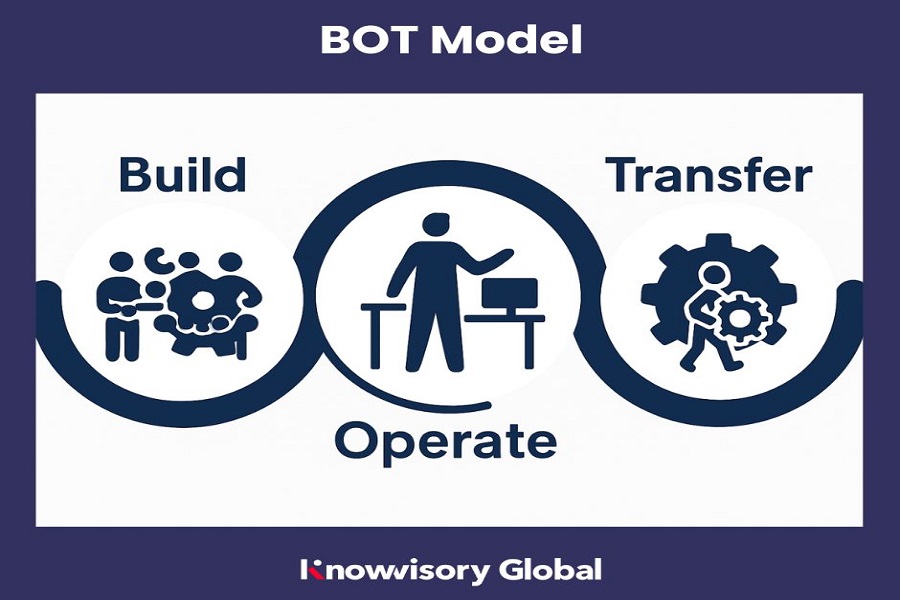
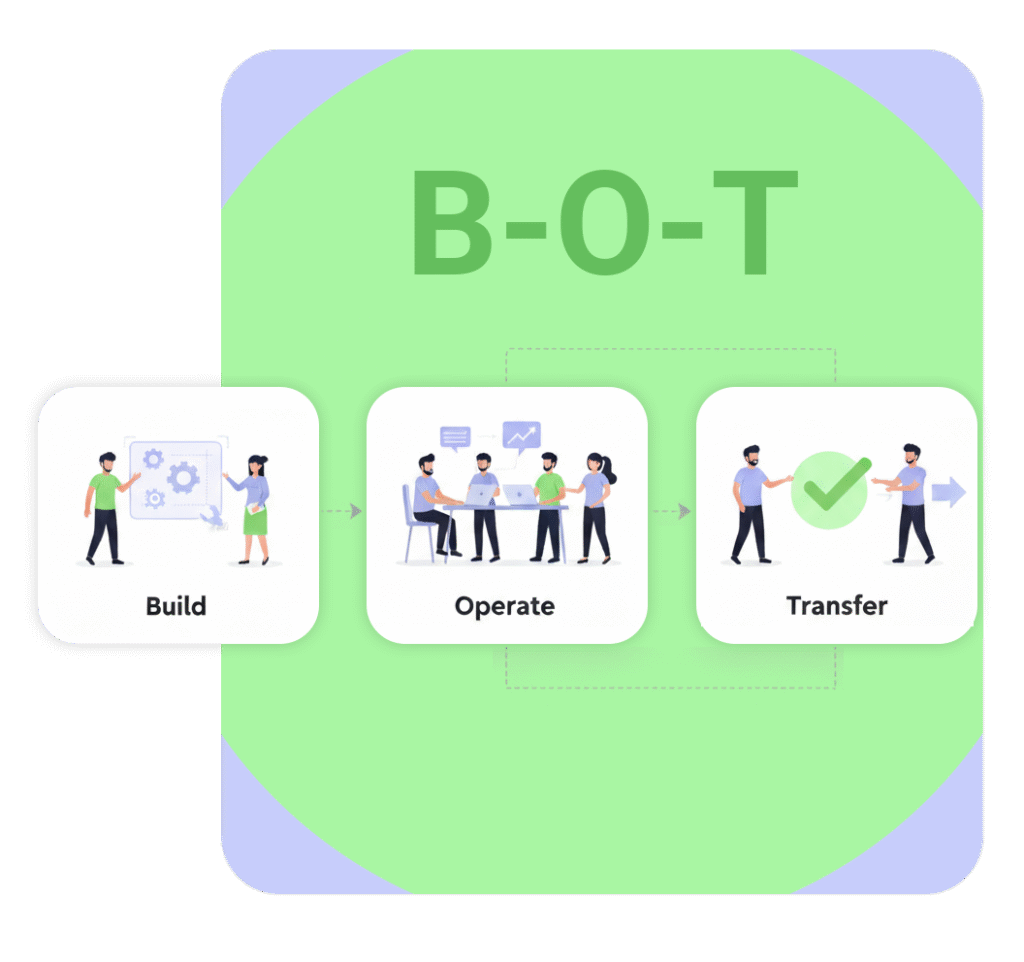
For U.S. business owners – especially in the startup and mid-market space – growth is both the goal and the challenge. You need to scale operations, strengthen financial systems, and expand your team… All without crushing your budget or drowning in risk. Traditional outsourcing models offer cost savings but can fall short when you want tighter control and deeper integration with your existing in-house teams, clients, or work processes. That’s where Build-Operate-Transfer (BOT) comes in – a strategic model that delivers the best of both worlds: short-term operational support and long-term ownership. What is the Build-Operate-Transfer Model? The Build-Operate-Transfer model is a contractual engagement where a company (the client) partners with an external expert (the service provider) to: Build an offshore team or operation aligned with the client’s goals Operate it temporarily while maintaining service quality and performance Transfer complete control, staff, and systems back to the client once it’s running efficiently It’s like getting your ideal team, systems, and workflows custom-built for you – without having to figure it all out alone. It strengthens your global capabilities and allows you to focus on what matters the most – building your brand. For U.S. companies, this model is especially valuable when building finance and accounting functions offshore. Why? Because the stakes are high and any misstep can cost you time, compliance, and IRS penalties. The Three Phases of the BOT Model Let’s break down each phase of the BOT model – and show you how it helps U.S. businesses build efficient finance teams offshore. 1. Build Phase – Laying the Foundation This phase is where all the heavy lifting begins. During this phase, we work toward setting up your offshore operations. From setting up the necessary infrastructure to hiring and training the initial team, and establishing the operational workflows and technology stack, we do it all to ensure the smooth integration of your offshore team with your existing systems.  Here’s what happens during the Build phase: Scoping: We work with you to define your financial operations’ needs. Whether it is bookkeeping, payroll management, accounts payable services, tax preparation, or all of the above. Process Design: Based on your goals, we map out workflows, controls, and system requirements that align with U.S. standards and your internal tools (e.g., QuickBooks, Xero, ADP, or any other software). Recruitment: We then tap into our talent network to build your dedicated offshore team just for your company. We only recruit people who are trained in U.S. GAAP, payroll compliance, and related compliance standards. Infrastructure Setup: We secure a workspace for your team, provide VPN access, and establish compliance and security protocols for complete data security and process transparency. We don’t just staff your team – we build your offshore finance engine. Everything is tailored, documented,  and compliant before a single transaction is processed. Sanjeev Kumar, CEO, KnowVisory Global 2. Operate Phase – Run by Experts, Owned by You Once the team and systems are ready, we manage your operations under your oversight. This is where U.S. business owners really see the value: a functioning offshore team working just for you, without the day-to-day hassle. The ‘Operate’ phase includes: Daily Execution: The offshore team handles the finance tasks you delegate – from bookkeeping to accounting, payroll, expense categorization, financial reporting, etc. Performance Management: Our real-time dashboards and regular reporting keep you informed. With KPIs like turnaround time, accuracy rate, and SLA adherence, we make sure the results are always measurable. Process Refinement: We continuously improve workflows, train teams, and refine processes based on your feedback and business needs. Communication: Our regular check-ins, online meetings, and shared documentation mean you stay in the loop. 3. Transfer Phase – When Ownership Comes Home Here’s where BOT sets itself apart from traditional outsourcing models: you get to completely own your team. What happens during Transfer? Handover Plan: We prepare a full roadmap for team transition, including asset transfer, process ownership, and team reporting structure. Knowledge Transfer: Through documentation, training, and SOP handoffs, your internal leaders are fully equipped to take the reins. Legal & Compliance: All IP, access credentials, and operational rights are formally transferred. Contracts close, or shift to post-transfer support. Post-Transfer Support: We don’t walk away. We stay on to troubleshoot, advise, or manage escalations as needed. With us, the Transfer phase feels less like a “handover” and more like a graduation – your team is now capable, mature, and embedded in your business DNA. The Strategic Benefits of BOT for U.S. Business Owners You’ve seen how BOT works—but why should a U.S. business owner seriously consider this model over outsourcing or hiring in-house? Let’s explore the real-world value of BOT. 1. Cost-Efficiency Without Cutting Corners Traditional outsourcing reduces costs, but often at the expense of transparency or control. BOT flips the model. It offers cost savings today and a long-term asset tomorrow. With BOT: You can save the high upfront costs (and headache) of building an offshore team from scratch. A third-party service provider like KnowVisory Global invests in setting up your team, infrastructure, and systems – so you don’t have to. Over time, you gain full ownership of a finance team that operates at a lower cost than U.S.-based hires, with no recurring vendor markup. 2. Complete Operational Control Once your team is transferred, it’s yours, fully and legally. That means: You control the processes, performance metrics, and team priorities. You can integrate your offshore finance operations into your internal structure. You’re not tied to a third-party SLA. You build internal strength – the way you want. For businesses seeking independence and scalability, BOT is a future-proof path. 3. High-Quality Global Talent Without Hiring Hassles Recruiting skilled finance professionals in the U.S. is getting harder. Talent shortages, especially among CPAs and bookkeepers, are driving up costs and slowing growth. With BOT: You get access to certified professionals experienced with U.S. finance systems. Your team is exclusively yours. Just like your in-house resources. No talent sharing or rotation. You get to save on the time

Read more
Contact us

Ready to Transform Your Financial Operations?

Partner with us to simplify finance and accounting. We can help you maximize efficiency and drive measurable growth for your business.

Your benefits:
How to Get Started
1

Fill out our form highlighting your requirement

2

We do a discovery call at a time convenient to you

3

We prepare a customized plan & help you get started

Schedule a Free Consultation