







How to Outsource Bookkeeping to an Offshore Team — Without Losing Control of Your Clients or Quality
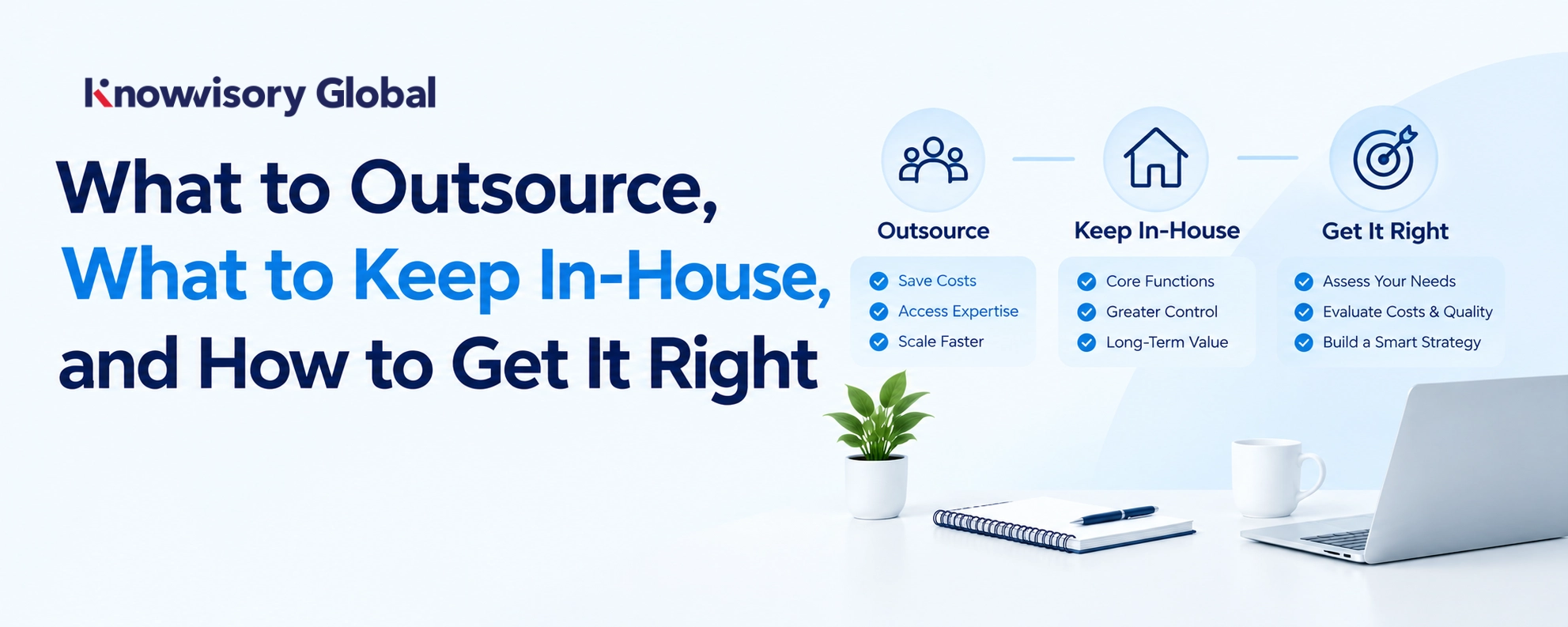
A step-by-step operational guide for mid-sized US CPA firms ready to add capacity, protect margins, and free their senior staff for the work that actually grows the firm. WHO THIS GUIDE IS WRITTEN FOR This guide is written specifically for managing partners and operations leaders at mid-sized US CPA firms — typically 10 to 100 professional staff, serving 100 to 800 business clients — who are experiencing capacity constraints, rising delivery costs, and difficulty retaining qualified bookkeeping staff. The frameworks, pricing benchmarks, and case studies here are calibrated for firms at your scale. Mid-sized CPA firms occupy a structurally difficult position in the US accounting market. You are large enough to carry significant overhead — multiple partners, lease obligations, HR infrastructure — but not large enough to absorb the talent costs of a full in-house bookkeeping operation without it directly compressing partner margins. Four forces are converging to make this moment different from prior cycles of outsourcing interest. The Talent Pipeline Has Structurally Narrowed The AICPA has documented a persistent and worsening imbalance: more licensed CPAs are retiring each year than new candidates are completing the licensure pathway. For mid-sized firms, this creates a specific problem — you compete for the same bookkeeping talent pool as the large regionals and nationals, without the brand or compensation infrastructure to consistently win. Vacancy cycles of 60 to 90 days on bookkeeping roles are now routine. Compensation Inflation s Permanent, Not Cyclical A competent bookkeeper in a US metropolitan market now costs $52,000 to $68,000 in base salary alone — before factoring in the employer share of payroll taxes, health benefits, PTO, training, and office infrastructure. Total cost of employment typically runs 1.35 to 1.45× base salary. At that cost structure, bookkeeping generates negative margin at most billing rate levels in the mid-market. Client Expectations are Shifting Upward Your business clients increasingly expect real-time financials, faster month-end closes, and strategic commentary alongside their P&L — not just accurate categorization of historical transactions. Meeting this expectation requires your senior accountants and CPAs to spend less time on bookkeeping and more time on analysis. Achieving that reallocation requires a credible, lower-cost delivery layer for the transactional work. Margin Pressure is Structural Across the mid-sized CPA firm segment, bookkeeping services now consistently generate the lowest margins in the service mix — often below 20% after fully loaded costs — while consuming a disproportionate share of senior staff time in review and correction. Firms that restructure their bookkeeping delivery model typically see overall margin improvement of 12 to 22 percentage points on that service line within 12 months. THE STRATEGIC IMPERATIVE For a firm billing $3M to $15M annually, the economics of maintaining a fully in-house bookkeeping team have become difficult to justify on margin grounds alone — before accounting for the recruitment burden, retention risk, or opportunity cost of senior staff time. Offshore bookkeeping is no longer a cost-cutting measure; for many firms at this scale, it is the prerequisite for sustaining a viable service mix. For managing partners wondering how to outsource bookkeeping without compromising client relationships, the answer lies in building a structured operating model rather than simply transferring work overseas. The firms that succeed follow a documented transition framework, establish clear review controls, and treat outsourcing as an extension of their practice management strategy. 2. What to Outsource — And What to Keep In-House The decision about which functions to offshore is the most consequential early choice you will make. The right answer is not ‘everything bookkeeping-related’ — it is the subset of bookkeeping tasks that are rule-based, repeatable, and do not require direct client judgment. Functions well-suited for offshore delivery Transaction categorization and coding — Applying your chart of accounts rules to bank and credit card feeds Bank and Credit Card Reconciliations — Matching cleared items to ledger entries, flagging exceptions Accounts Payable Processing — Invoice entry, coding, payment scheduling, vendor file maintenance Accounts Receivable Management — Invoice generation, aging report preparation, collection follow-up tracking General Ledger Maintenance — Journal entry processing, intercompany eliminations, accrual entries Month-End Close Support — Checklist execution, prepaid/accrual schedules, depreciation schedules Financial Report Preparation — Standard P&L, balance sheet, and cash flow statement assembly Payroll Data Entry and Reconciliation — Processing payroll journal entries against provider reports THE STRUCTURAL PRINCIPLE Offshore bookkeeping works best when it handles the inputs and assembly of financial data, while your in-house team controls the interpretation, judgment, and client delivery. The offshore team is your production floor; your CPAs are the quality directors and client advisors. 3. Why Knowvisory Global — What Makes This Engagement Different The offshore bookkeeping market is crowded, and generic claims about ‘quality’ and ‘being an extension of your team’ are offered by providers at every price point. Before choosing any provider, including us, you should evaluate the specific structural differences that determine whether an offshore engagement succeeds or creates a new management burden. THE KNOWVISORY DIFFERENCE Founded and Led by Credentialed Professionals — Not a Staffing Company Knowvisory Global is co-founded by an Indian Chartered Accountant (ICAI) and a US Certified Public Accountant (AICPA). This is not merely a background detail—it influences how every engagement is structured. Your offshore team is managed by professionals who have worked inside US CPA firms, understand GAAP at a technical level, and anticipate the quality standards your partners expect before work reaches your review queue. Dual-Credential Oversight: Every engagement is reviewed by staff holding Indian CA or US CPA credentials—not just trained bookkeepers. Platform Expertise: Certified proficiency in QuickBooks Online, QuickBooks Desktop, Xero, NetSuite, and Sage, with dedicated specialists assigned by platform. US GAAP & GAAS Alignment: All work products are structured to meet US accounting standards and audit-readiness requirements from day one. Time Zone Advantage: India Standard Time (IST) enables overnight processing so completed work is available before your US business day begins. Enterprise-Grade Security: Role-based access controls, MFA-enabled systems, AES-256 encrypted file transfers, signed NDAs, and strict no-local-storage policies. Knowvisory’s Contractual SLAs for Mid-Sized CPA Firm Engagements We
How to Outsource Bookkeeping to an Offshore Team — Without Losing Control of Your Clients or Quality
A step-by-step operational guide for mid-sized US CPA firms ready to add capacity, protect margins, and free their ...
Categories

10 KPIs Every US Business Over $1M Revenue Should Track Monthly
There are 36.2 million small businesses in the USA. But did you know out of these only 9% small businesses

Cash Flow Control Made Simple: Tips and Tools That Actually Work
Cash flow is the foundation of a healthy and sustainable business, and the biggest reason why businesses survive or succumb.

Key Financial Challenges Faced by SMBs in 2026: A Business Report
Year 2026 has been a year of growth for most small and mid-sized businesses (SMBs) across the United States. The

The Accounting Cycle Explained: A Complete Guide to Managing Your Financial Process
Every business, no matter its size, runs on numbers. Yet, most businesses, especially during their foundation years, manage their finances

Why QuickBooks Alone Is Not Enough for eCommerce Bookkeeping and Accounting in 2026
QuickBooks is one of the most popular eCommerce bookkeeping and accounting tools — and for all the good reason. It’s

Cost Accounting: A Smart Approach to Identifying Costs and Maximizing Profit Margins
Running a business requires constant attention to major expenses. Payroll, revenue, rent and inventory are always under a close watch.

How Much Do Outsourced Bookkeeping Services Cost?
Bookkeeping may not be the flashiest part of your business strategy, but nonetheless it is extremely important. Clean and accurate

What is a Chart of Accounts (COA) and Why It Matters for Your Business?
Every time money moves in your business, it needs to be recorded correctly. But without a clear system, it’s easy

How Virtual Accounting Helps Healthcare Practices Efficiently Manage Their Finances
Running a healthcare practice today goes far beyond delivering quality patient care. From managing insurance reimbursements and patient billing to