Technology is no longer a nice-to-have for accounting firms — it’s mission-critical for improving operational efficiency, delivering exceptional client service, and driving sustainable growth. The right technology stack, when combined with expert talent, can be the difference between a firm that scales smoothly and one that buckles under increasing complexity.
But simply investing in more software isn’t the answer. Many accounting firms pay for 15–20 different applications, yet their teams still spend hours re-entering data, chasing client documents, switching between disconnected systems, and correcting manual errors.
The problem isn’t a lack of technology—it’s a lack of strategy. Building the right technology stack for your accounting firm means selecting integrated accounting software, practice management software, and workflow automation tools that align with your firm’s processes, growth plans, and client expectations while eliminating unnecessary complexity.
Tech Spend Is Climbing — But So Is Waste
Accounting firms now devote roughly a fifth of their budgets to technology, and most plan to increase IT spending this year. Investments are flowing into AI-powered accounting tools, cloud accounting solutions, workflow automation, CRM systems, and digital collaboration tools.
Yet higher spending doesn’t automatically create greater efficiency. Industry research shows many firms use less than half of their technology stack’s capabilities, while only a small percentage maximize the value of their software investments. As firms continue their digital transformation, acquiring new technology is becoming easier. But are you maximizing their value through effective integration, automation, and user adoption?
What Firms Actually Want from Their Technology
When firms invest in new technology, they are typically looking to improve efficiency, collaboration, and profitability. The most successful accounting technology solutions help firms achieve:
- Remote access and cloud collaboration
- Automated preparation of tax returns and financial statements
- Simplified client document collection
- Better data capture and processing
- Reduced manual data entry
- AI-powered workflow automation
- Stronger cybersecurity and data protection
- Faster invoicing and payment processing
The common thread isn’t choosing software with the longest feature list—it’s building an integrated accounting technology ecosystem that eliminates operational bottlenecks, improves collaboration, and supports long-term growth.
How to Build the Right Tech Stack for Your Accounting Firm – Step-by-Step Process
1.Start With an Honest Audit, Not a Shopping List
Before investing in new accounting software, take stock of the systems you already have.
That means mapping your processes end to end — identifying which tasks are already automated and which are still manual — and pinpointing where things slow down or go wrong. Only after completing the assessment should you start evaluating new solutions.
This audit-first mindset also helps firms avoid what one technology leader described as “app clutter” — the tendency to buy a new tool for every new problem instead of first checking whether an existing platform already covers that need.
Before investing in new accounting software, determine whether the bottleneck is actually technology or capacity. Many firms discover that delays are caused not by inadequate software, but by limited internal resources or inefficient workflows. In these situations, outsourced business accounting services can often deliver faster results than purchasing another software application.
2.Prioritize Accounting Software Integration
Accounting software integration is one of the most important factors when building a scalable technology stack.
A disconnected accounting firm technology stack creates data silos, duplicate data entry, inconsistent reporting, and unnecessary friction for both staff and clients. By contrast, firms with integrated accounting systems are significantly more likely to improve productivity, client satisfaction, and revenue growth.
When evaluating new technology, ask:
- How well does it integrate with our existing accounting software?
- Will it strengthen or weaken our cybersecurity posture?
- Can our staff and clients adopt it easily?
- Does the vendor provide ongoing implementation support and training?
The best technology stack for accounting firms isn’t the one with the most applications—it’s the one where every tool works together seamlessly to create a single source of truth.
3.Look Beyond Feature Lists
It’s easy to get distracted by impressive product demonstrations and long feature lists. But the best accounting technology solutions are the ones your team will actually use.
When comparing software vendors, evaluate each solution based on:
- Ease of use
- Integration capabilities
- Data security and compliance
- Automation features
- Vendor reputation and customer support
- Training resources
- Total cost of ownership
- Scalability
Remember, software should simplify your firm’s operations—not introduce additional complexity.
4.Choose Software Built for Scalability, Not Just Today’s Needs
The technology needs of a firm with 10 employees are very different from those of a firm with 100. That’s why scalability should be a key consideration when building your accounting firm technology stack.
Rather than choosing software that only solves today’s challenges, look for cloud accounting solutions and practice management software that can support future growth. As your client base expands and your service offerings evolve, your technology should continue to support your operations without requiring frequent replacements.
When evaluating scalability, ask:
- Can the software accommodate additional users and clients?
- Will it support new service lines such as CAS or advisory services?
- Does it integrate with future applications and third-party tools?
- Does the vendor have a clear product roadmap and regular updates?
Building your technology stack in phases often delivers better results than trying to implement every solution at once.
5.Use AI to Improve Productivity—Not Replace Professional Judgment
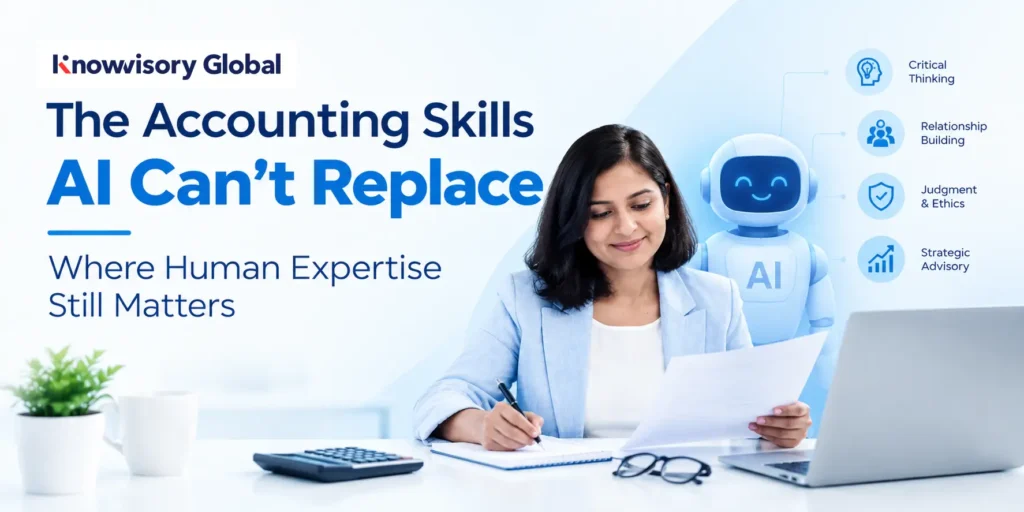
Artificial intelligence is rapidly becoming an integral part of the modern technology stack for accounting firms. Today’s AI-powered tools can automate repetitive work, reduce administrative effort, and help professionals focus on higher-value advisory services.
AI can automate routine tasks, but it cannot replace experienced accounting professionals who understand compliance requirements, client relationships, and professional judgment.
Many firms are using AI alongside outsourced accounting teams, allowing technology to handle repetitive work while skilled professionals focus on review, analysis, and client service.
6.Prioritize Cybersecurity from Day One
Technology adoption also increases your responsibility to protect client data.
Every application you add to your accounting software ecosystem should strengthen—not weaken—your firm’s security posture.
Look for essential security features such as multi-factor authentication (MFA), role-based access controls, encryption, secure client portals, and disaster recovery capabilities.
A single security breach can damage client trust far more than any productivity gains technology provides.
7.Invest in People as Much as Technology
Even the best software fails if people don’t know how to use it.
The most successful firms recognize that technology solves process problems—but people solve capacity problems.
During busy seasons, month-end close, or rapid growth, firms often discover that even the best software cannot eliminate review work, reconciliations, or client communication.
That’s why many firms combine modern technology with outsourced accounting support. Offshore professionals work within the firm’s existing technology stack, helping teams clear backlogs, accelerate turnaround times, and focus on advisory services instead of repetitive bookkeeping.
What Should a Modern Accounting Firm Tech Stack Include?
| Function | Typical Software |
| General Ledger | QuickBooks, Xero, NetSuite |
| Tax Preparation | CCH Axcess, UltraTax |
| Audit | CaseWare |
| Document Management | ShareFile, M-Files |
| Workflow Management | Karbon, Jetpack Workflow |
| CRM | HubSpot, Salesforce |
| Payroll | Gusto, ADP |
| Practice Management | Canopy |
| Client Portal | SmartVault |
| AI & Productivity | Copilot, ChatGPT Enterprise, Vic.ai |
| Reporting | Fathom, Spotlight Reporting |
Technology Alone Doesn’t Solve Operational Challenges
Accounting firms often assume that investing in new software will automatically improve productivity. In reality, technology is only as effective as the people and processes behind it.
Even firms with modern cloud accounting platforms and AI-powered automation continue to face challenges such as:
- Month-end close delays
- Reconciliation backlogs
- Limited staff capacity
- Inconsistent bookkeeping processes
- Missed deadlines during busy seasons
These challenges are rarely caused by software alone. More often, they’re the result of capacity constraints, inefficient workflows, or a lack of standardized processes.
That’s why many growing CPA firms combine their technology investments with CPA-focused outsourced accounting support. Whether you’re already using cloud accounting software or looking to modernize your finance function, an experienced offshore accounting team brings both the technical expertise and platform proficiency needed to support your growth. From bookkeeping and reconciliations to financial reporting, accounts payable, and payroll support, they work seamlessly within leading accounting platforms to streamline operations—without the need to build a larger in-house team.
The result? Greater capacity, faster turnaround times, improved consistency, and more time for your in-house team to focus on advisory services and strengthening client relationships.
If your firm is still relying on disconnected systems, manual processes, or stretched internal teams, it may be time to look beyond technology alone. Partner with KnowVisory Global and optimize your financial operations through technology-enabled outsourced accounting solutions. We help you scale efficiently, improve turnaround times, and deliver exceptional client service – at up to 50% lower cost than building an in-house team.
Ready to build a smarter, more scalable accounting practice? Partner with KnowVisory Global to optimize your technology, streamline operations, and unlock greater capacity for growth. Let’s talk.