Outsourcing

accounting support partner

How to Choose the Right Accounting Support Partner: 7 Things Growing Businesses Should Know

Every growing business eventually hits a wall. What once seemed manageable with spreadsheets and basic bookkeeping starts becoming time-consuming, error-prone, and difficult to scale. Back-office operations get messy, deadlines slip, and the numbers you need to make decisions aren’t ready when you need them. That’s when many companies begin looking for professional accounting support services in the USA. But choosing the wrong accounting support partner can create just as many problems as having no partner at all. Whether you’re considering a bookkeeping company, a fractional finance team, or an outsourced accounting partner, this guide will help you evaluate your options and choose a provider that supports your long-term business growth. Know What You Actually Need First “Accounting support” can mean a lot of different things. Before you start comparing providers, identify the level of accounting support your business actually requires. Not every business needs a full finance department, and not every provider offers the same level of expertise. Different accounting support services are designed to address different business needs: Bookkeeper – Records day-to-day transactions, reconciles bank accounts, manages accounts payable and receivable, and maintains accurate financial records. Full-cycle accountant – Handles month-end and year-end close, prepares financial statements, and ensures accurate financial reporting. Controller – Strengthens internal controls, reviews financial data, improves accounting processes, and supports audit readiness. Fractional CFO – Provides budgeting, forecasting, cash flow management, financial planning, and strategic business guidance. Tax Specialist – Manages tax compliance, tax planning, and filing requirements. Many firms offer a mix of these, but very few are equally strong at all of them. Understanding what your business requires today – and what it may need as it grows and becomes more financially complex – will help you choose the right outsourced accounting partner. Prioritize Value Over Price When evaluating accounting support services in the USA, it’s easy to focus primarily on cost. However, the lowest-priced provider isn’t always the best investment, and the most expensive one isn’t necessarily the best fit either. Instead, evaluate providers based on overall value, considering factors such as: Relevant industry expertise Quality of service delivery Scalability as your business grows Technology and automation capabilities Communication and responsiveness Transparent pricing A low-cost provider that lacks the expertise to support your business can lead to reporting errors, compliance issues, and costly rework. Conversely, paying for services your business doesn’t yet require can unnecessarily increase operating costs. The right partner delivers measurable value—not simply the lowest or highest price. Evaluate Their Capabilities An accounting provider should become an extension of your business, not just another vendor. Before making your decision, evaluate how they deliver their services—not just what they promise during the sales process. Industry Experience: Accounting requirements vary significantly across industries. Construction companies require job costing, healthcare organizations deal with complex compliance requirements, while professional service firms focus heavily on profitability reporting. Choose an outsourced accounting partner with experience supporting businesses similar to yours. Familiarity with your industry often leads to faster onboarding, better financial insights, and fewer costly mistakes. Technology and Automation: Modern accounting should leverage cloud-based technology and automation to improve efficiency. Look for providers experienced with platforms such as QuickBooks Online, Xero, Sage Intacct, NetSuite, and other cloud-based accounting platforms. They should also integrate seamlessly with payroll systems, expense management tools, invoicing software, and CRM platforms to eliminate manual processes and improve reporting accuracy. Data Security: Financial information is among your company’s most valuable assets. A reliable accounting partner should have strong security protocols in place, including: Multi-factor authentication (MFA) Role-based user access Secure cloud storage and client portals Encrypted document sharing Regular data backups Strong security practices help protect your business from unauthorized access and data breaches. Communication and Support: Timely communication is just as important as accurate bookkeeping. Look for a provider that offers a dedicated point of contact with clearly defined response times, regular financial review meetings, and consistent monthly reporting schedules. Reporting and Business Insights: Good accounting goes beyond recording transactions. Your accounting partner should provide meaningful financial reports that help you understand business performance, monitor cash flow, identify trends, and make informed strategic decisions. Watch for These Red Flags Not every provider is equipped to deliver high-quality accounting support services. Pay attention to warning signs during your evaluation process. Common red flags include: Limited experience with businesses like yours Unclear pricing or hidden charges Poor communication during the sales process No documented quality control or review procedures Weak data security practices No client references or case studies Frequent staff turnover with no dedicated account manager If a provider struggles to communicate clearly before you become a client, it’s unlikely the experience will improve afterward. Choose a Partner That Can Scale With Your Business Your accounting needs will evolve as your business grows. A provider that works well today should also be able to support future requirements such as: Higher transaction volumes Multi-location or multi-entity accounting Payroll processing Sales tax and compliance Budgeting and forecasting Controller and CFO advisory services Audit support Changing accounting providers every few years creates unnecessary disruption. Select a scalable outsourced accounting support partner that allows you to grow without constantly rebuilding your finance function. Plan for a Smooth Transition A successful onboarding process is essential for long-term success. Your transition should include: A clear plan and timeline for moving your accounting over A review of your account balances to make sure everything starts accurate and clean Documented accounting policies and standardized financial workflows More frequent check-ins during the first few months to catch any issues early Review the Partnership Regularly Choosing an accounting partner isn’t a one-time decision. The relationship should continue delivering value as your business evolves. Review the partnership periodically by assessing whether: Financial reports are consistently accurate and delivered on time. Communication remains responsive and proactive. The provider continues to understand your business goals. Recommendations go beyond compliance and contribute to better financial decision-making. The service continues to meet your changing operational requirements. A strong accounting partner should continuously improve your financial operations—not

Read more
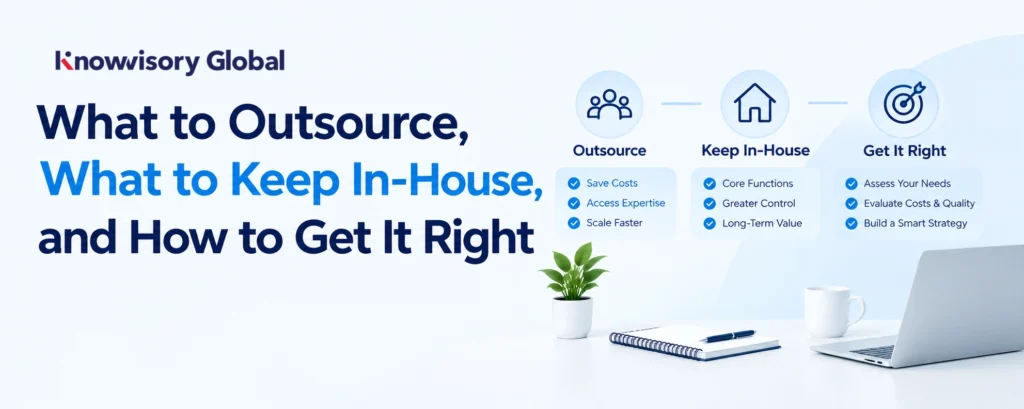
Mastering Outsourcing

Mastering Outsourcing: 8 Tips to Successfully Manage Your Complex Business Operations

Most small and mid-size businesses often operate on a boot-strapped budget. They juggle limited resources and try to manage operations and growth with unexpected challenges. When it comes to pulling up resources, every dollar counts. Outsourcing often comes up as a powerful strategy that allows businesses to achieve more with less. By partnering with external service providers, they can tap into specialized expertise at a fraction of the cost. But choosing the right business operations to outsource often remains a challenge – without the right roadmap in place. In this guide, we’ll share 10 actionable tips to help you navigate the outsourcing maze and make it a success for your business. 8 Steps to Outsourcing Your Business Operations Here’s your ultimate roadmap to ensure effective business process outsourcing: Step 1: Define Clear Objectives Outsourcing is not a one-size-fits-all solution. You need to clearly define your objectives to make the most out of it. So carefully evaluate your business requirements: By defining your goals, you can fine-tune your outsourcing strategy and measure its impact on your business success. Step 2: Identify the Right Functions to Outsource Small and medium (and even large) enterprises often struggle to decide the right business functions to outsource. Here are some key considerations that you must take into account: These steps will provide you the clarity if outsourcing your business processes can lead to improvements in business efficiency. | Also read: How Outsourcing Finance and Accounting Can Propel Your Business Forward | Step 3: Choose the Right Outsourcing Partner The success of outsourcing heavily depends on the choice of vendor. Look for a partner with: Conduct due diligence by reviewing case studies, client testimonials, and industry certifications and choose a business outsourcing partner that best aligns with your company culture and business needs. Step 4: Leverage Technology for Seamless Integration Robust technological solutions are critical for successful business outsourcing. Make sure your partner stays current with technological advancements and uses: Integrating these tools ensures better coordination and optimized processes, and maximum business benefits. So, make sure your outsourcing partner ticks all these boxes. Step 5: Establish Clear SLAs and KPIs Set Service Level Agreements (SLAs) and Key Performance Indicators (KPIs) to measure your partner’s performance. These benchmarks should include: Regularly review these metrics to ensure the outsourcing partnership delivers on its promises. Step 6. Foster Seamless Communication and Collaboration Communication is the backbone of any successful outsourcing arrangement. From Day 1, establish: By establishing a strong medium of communication and collaboration, you can keep your teams (both internal and external) aligned with your business goals while preventing potential roadblocks. Step 7: Manage Risks Proactively Outsourcing comes with its own set of risks. Data breaches, compliance issues, and cultural misalignments are just a few of them. Mitigate these risks by: Step 8: Focus on Continuous Improvement Business outsourcing isn’t a “set it and forget it” process. It requires regular assessment and continuous improvements. You must regularly: It’s Time to Make Way for a Strategic Outsourcing Partnership for Long-Term Success Outsourcing business operations is no longer just a cost-cutting tool – it’s a strategic partnership that can help your business achieve operational excellence. By following our tips, you can navigate the complexities of outsourcing while ensuring long-term business success. Whether you’re just starting or looking to optimize existing business processes, a well-structured outsourcing strategy can transform the way your business operates and can help you stay competitive in a rapidly evolving market.

Read more
Contact us

Ready to Transform Your Financial Operations?

Partner with us to simplify finance and accounting. We can help you maximize efficiency and drive measurable growth for your business with expert-led accounting services for startups.

Your benefits:
How to Get Started
1

Fill out our form highlighting your requirement

2

We do a discovery call at a time convenient to you

3

We prepare a customized plan & help you get started 

Schedule a Free Consultation