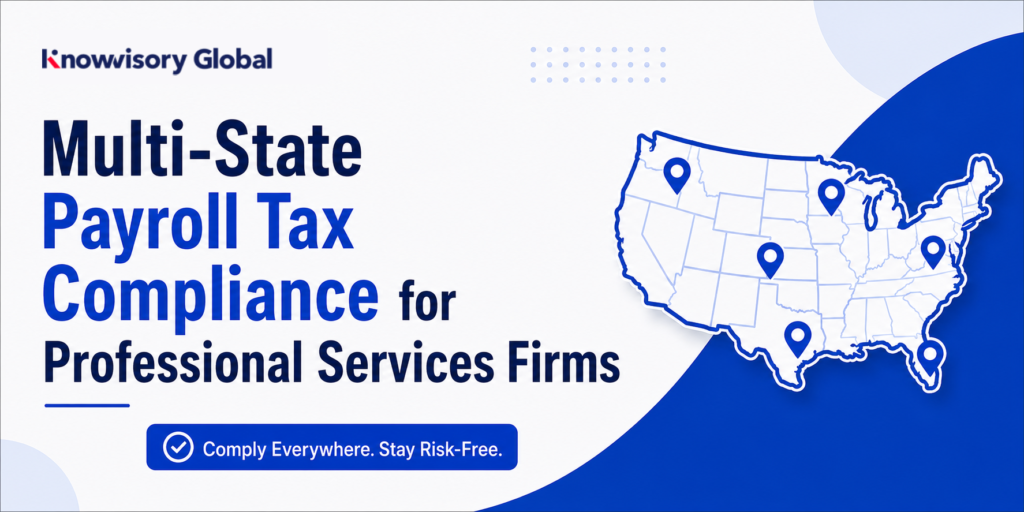

Multi-State Payroll Tax Compliance for Professional Services Firms
Professional services firms — law firms, consultancies, accounting practices, engineering firms — thrive on flexible talent. Attorneys hold licenses across states, consultants live on client sites for months, remote tax professionals join during busy season, and project teams deploy wherever the work is. That flexibility drives growth, but it also stacks up payroll obligations fast. In the U.S., all 50 states plus the District of Columbia have their own rules for employer registration, income tax withholding, unemployment insurance, wage and hour compliance, paid leave, and reporting. Miss one, and you expose your firm to fines, penalties, audits, and back taxes that commonly range from a few hundred dollars to $10,000 or more per violation. In this blog, we’ll explain how multi-state payroll compliance works, the challenges unique to professional services firms, and the best practices that help firms remain compliant while supporting long-term growth. |For detailed information, read our Payroll Compliance Guide for Professional Services Firms| What Is Multi-State Payroll Tax Compliance? It’s the process of managing payroll in line with the tax and employment requirements of every state where your employees work, not just where your firm is headquartered. This covers: State income tax withholding Employer payroll tax registration State unemployment insurance (SUI) Wage and hour compliance Paid family and medical leave programs Local payroll taxes State payroll reporting and filings State Vs. Multi-State Payroll Tax Compliance: Understanding the Difference Payroll Activity Single-State Firm Multi-State Professional Services Firm Employer Registration One state Multiple states as workforce expands Payroll Tax Withholding One state tax authority Separate withholding requirements for each applicable state State Unemployment Insurance One agency Multiple agencies with different wage bases and contribution rates Wage & Hour Rules One set of regulations Must comply with each applicable state’s labor laws Payroll Reporting Single filing schedule Multiple filing frequencies and reporting requirements Administrative Complexity Low Moderate to High Compliance Risk Relatively low Significantly higher without standardized processes Payroll Tax Compliance Challenges That Professional Services Firms Face Some of the most common challenges of multi-state payroll tax compliance include: Remote and Hybrid Workforces: Hiring employees across state lines increases the number of payroll registrations, tax withholding requirements, and reporting obligations that employers must manage. Client-Site Assignments: Consultants, engineers, auditors, and legal professionals often work at client locations for extended periods, potentially triggering payroll obligations in those states. Complex Compensation Structures: Many professional services firms offer a mix of salaries, bonuses, commissions, billable-hour incentives, profit-sharing, or partner distributions. Managing these varied compensation models while ensuring accurate payroll calculations, tax withholdings, and compliance across multiple jurisdictions can be challenging. Evolving Worker Classifications: Many firms engage fractional executives, independent consultants, contract attorneys, or seasonal accountants. As these relationships evolve, worker classifications should be reviewed regularly against federal guidance on employee vs. independent contractor status to ensure compliance with federal and state employment laws. Managing State-Specific Payroll Tax Requirements: Payroll tax rules differ significantly from one state to another. Income tax withholding, unemployment tax rates, taxable wage bases, local payroll taxes, and reciprocity agreements all vary, requiring businesses to apply the correct tax rules based on each employee’s work location. Different Payroll Tax Filing Deadlines Across States: Each state follows its own payroll tax deposit schedules, filing deadlines, and reporting requirements. Keeping track of multiple compliance calendars while ensuring timely tax payments and returns can become increasingly complex as businesses expand into new states. State-Specific Paid Leave Requirements: Many states and local jurisdictions have introduced their own paid sick leave and paid family leave laws. Since eligibility, accrual methods, employer contributions, and reporting obligations vary widely, employers must regularly update payroll processes to remain compliant. What Changes When You Hire in Another State As professional services firms expand their workforce across state lines, payroll teams should review the following areas regularly. Compliance Area Why It Matters Employer Registration Most states require you to register before you can run payroll for anyone working there. State Income Tax Withholding Withholding is based on where the work happens, not where the firm is headquartered. It prevents under-withholding and penalties. State Unemployment Insurance (SUI) Each state has its own registration process, tax rate, wage base, and filing deadlines. Wage and Hour Laws Minimum wage, overtime eligibility, meal breaks, and final paycheck rules differ by state. Non-compliance can lead to employee claims Paid Leave Programs Several states mandate paid family leave, disability insurance, or paid sick leave. Local Payroll Taxes Some cities and municipalities have their own payroll forms and filings. Late filings can attract penalties. The hard part isn’t learning these rules once. It’s keeping them accurate as employees relocate, projects shift, and state regulations change. For a distributed workforce, this has to be an ongoing process, not an annual clean-up. Here’s the 2026 payroll compliance checklist that every professional services firm must follow. Best Practices for Managing Multi-State Payroll Managing payroll across multiple states isn’t as difficult as it seems to be. With the right processes and technology, professional services firms can reduce compliance risks while supporting a flexible workforce. Put a relocation policy in writing. Ask employees to notify HR before they move to another state, so registrations and withholding changes are in place before the move, not after. Track where people actually work. Professional services staff split time between offices, client sites, and home. Keep that record current so the right state taxes, SUI, and reporting rules get applied. Standardize the process. Build consistent procedures for onboarding, withholding, registration, classification, approvals, and reporting. Consistency is what prevents manual errors from creeping in as the firm grows. Use payroll technology built for this. Modern platforms automate tax calculations, keep withholding tables current, handle e-filings, and flag compliance gaps. Integrating payroll with HR, time tracking, and accounting also removes duplicate data entry, which is where a lot of errors originate. Review compliance quarterly, not annually. Regular reviews catch incorrect withholdings, missing registrations, and outdated employee records before they turn into penalties. Preparing for Expansion into a New State Instead of waiting until payroll becomes difficult, firms