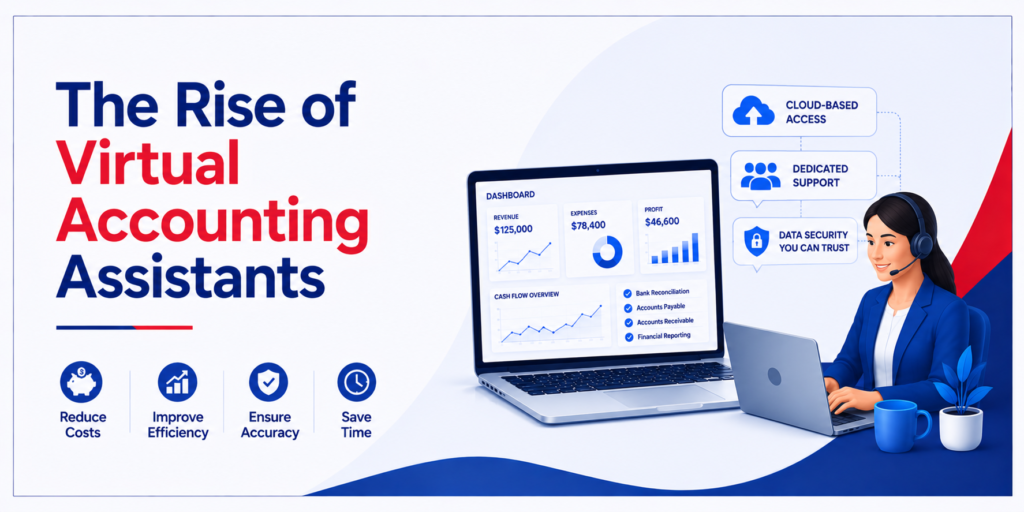
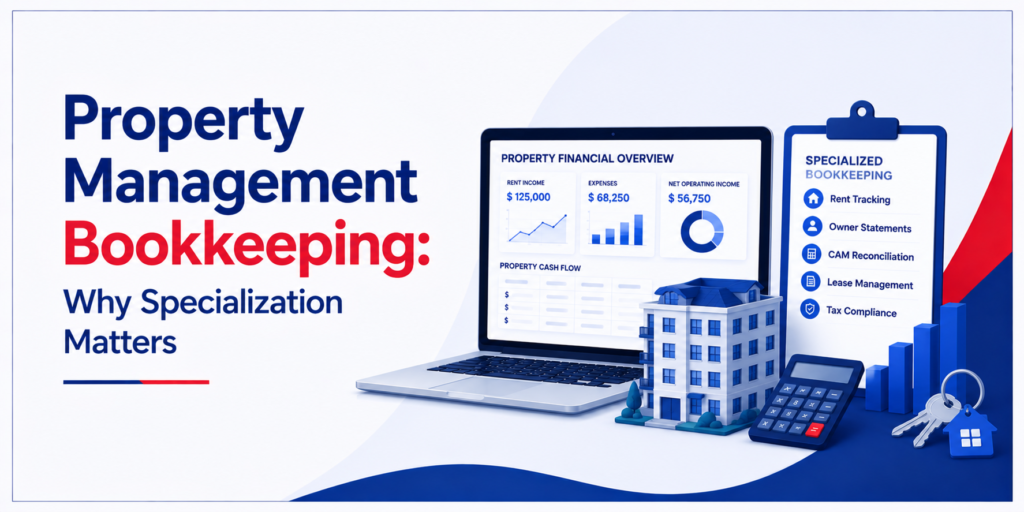
With experience and expertise across finance functions – accounting, bookkeeping, financial reporting, FP&A, tax support, controllership, and more – Indian accounting professionals are helping global businesses explore accounting outsourcing in India without building every role internally.
For a growing company, this can mean adding experienced accounting capacity, specialist skills, and expert process support while keeping finance leadership onshore, focused on decision-making.
In this blog, we’ll explore why global finance teams are increasingly working with Indian staff accountants, what roles they can support, and how to build a high-performing bookkeeping and accounting function with the right offshore talent.
Why Indian Accounting Talent Has Become Valuable to Global Businesses
- Indian Staff Accountants Bring Global Accounting Experience
The finance and accounting ecosystem in India has developed alongside decades of global business services, multinational operations, shared-service centers, accounting firms, and outsourcing organizations. Accounting professionals often have experience working with businesses across the US, UK, Australia, and other international markets. They understand different accounting practices, reporting requirements, month-end processes, and the expectations that come with supporting global finance teams.
As a result, they can provide valuable support managing core accounting activities, including:
- General ledger accounting
- Accounts payable and accounts receivable
- Bank and credit-card reconciliations
- Cost accounting
- Financial statement preparation
- Fixed-asset management
- Payroll accounting and reconciliation
- Tax and compliance
- Financial planning and analysis
For growing US companies, this combination of technical expertise and international experience makes Indian staff accountants a practical extension of the existing finance team.
- Businesses Can Build Teams Around Specific Capabilities
The Indian talent market includes commerce graduates, experienced accountants, Chartered Accountants, CPAs, management accountants, and finance professionals with international client experience.
Many of these professionals also have experience with US GAAP, IFRS, QuickBooks Online, Xero, NetSuite, SAP, Microsoft Dynamics, Bill.com, Excel, and other finance technologies.
This allows businesses to build a layered finance team instead of relying on one expensive generalist.
For example:
- A junior accountant can handle transaction processing and reconciliations.
- A senior accountant can manage the close and review account balances.
- A controller-level professional can support accounting operations and reporting.
- An FP&A analyst can support budgeting, forecasting, and financial analysis.
The result is a finance team built around specific capabilities rather than simply headcount. This depth of talent is one reason accounting outsourcing in India has become an increasingly practical option for global businesses looking to expand their finance capabilities.
- You can Scale the Finance Capacity As Your Business Grows
Finance requirements rarely remain static. A growing company may initially need bookkeeping and reconciliations. But as it expands, it may require AP/AR support, month-end close, reporting, FP&A, or controllership.
Your remote accounting team in India can scale alongside those requirements. This flexibility can be particularly useful during business expansion, acquisitions and integrations, ERP implementations, funding rounds, seasonal increases in workload, and during financial transformation projects.
It makes staffing more strategic and allows finance capacity to grow with actual business requirements.
- Indian Accounting Teams Works as an Extension of Finance
A successful offshore accounting team should not operate as a disconnected back office.
Remote accounting teams in India can work within the same accounting platform, follow the company’s chart of accounts, use established close checklists, participate in regular meetings, and follow defined approval and reporting workflows.
Over time, these professionals become familiar with the company’s business model, accounting policies, reporting requirements, deadlines, and internal processes. This allows them to contribute beyond basic transaction processing by identifying unusual entries, investigating variances, maintaining consistency across reporting periods, and escalating issues that require management attention.
As a result, you get a connected, well-coordinated finance team with global experience and unique skillsets.
- Time Zones Offers a Financial Advantage
The India-US or India-UK time difference can support a follow-the-sun workflow when processes are designed properly.
For example, an onshore team can finish its day by providing defined tasks, reconciliations, reporting requirements, or exception lists. The India-based team can continue that work during its own business hours.
By the next working day, completed schedules, reconciliations, transaction processing, or identified exceptions can be ready for review.
So, while judgment-heavy and collaborative work happen during overlapping hours, routine processes continue efficiently across time zones.
Indian Finance Professionals Add Value Beyond Transaction Processing
Modern finance outsourcing is moving beyond the idea of offshore accountants as transaction processors. As professionals gain knowledge of the business, their contribution also expands.
- An accountant handling reconciliations may identify recurring discrepancies.
- A senior accountant managing the close may identify opportunities to improve the process.
- An FP&A professional may identify trends in operating expenses.
- A controller-level professional may help strengthen reporting processes and financial controls.
Over time, this creates a progression from execution to insight.
The goal is not simply to process more transactions. It is to build a finance function that becomes more accurate, efficient, and useful to management over time.
How to Structure an Indian Accounting Team
There is no single model for working with an Indian accounting team. The right model depends on how much control, flexibility, and ownership a business wants to retain. Some businesses need ongoing outsourced accounting support, while others want to build a dedicated team in India that they can eventually manage themselves.
Build-Operate-Transfer
In a Build-Operate-Transfer (BOT) model, an outsourcing partner builds and manages the accounting team in India on the company’s behalf. This includes recruiting the right professionals, setting up processes and workflows, implementing technology, and managing day-to-day operations.
The business gets an operating finance team without having to manage the complexities of setting one up from scratch. Over time, as the team becomes established and processes are stable, ownership can be transferred to the company.
This model works particularly well for businesses that see India as a long-term finance and accounting hub, rather than simply a source of outsourced bookkeeping support. It allows the company to start with an experienced partner and gradually build its own team, infrastructure, and management capability. This is one of the biggest reason why global businesses are turning to India for build-operate-transfer.
Best suited for: Companies planning to build a larger, dedicated accounting or finance team in India and eventually take direct control of the operation.
Staff Augmentation
With staff augmentation, a company adds accounting professionals from an external provider to its existing finance team. The professionals work as an extension of the internal team and can be assigned to specific responsibilities based on the company’s immediate needs.
Unlike a fully outsourced model, the client generally retains control over workflows, priorities, systems, and day-to-day management. The external provider handles the recruitment, employment, and administrative aspects of the additional staff.
This model offers flexibility when accounting workloads increase, a team member is unavailable, or a company needs specific expertise without committing to a permanent hire. A business can scale the team up or down as requirements change while maintaining direct oversight of the work.
Best suited for: Companies that already have an established finance function but need additional accounting capacity, specialized skills, or temporary support without expanding their permanent headcount.
Fully Managed Accounting Services
With fully managed-services model, the external provider takes responsibility for managing defined accounting functions or the entire accounting process on behalf of the business. Instead of simply adding people to the existing team, the provider manages the work, processes, deadlines, and quality of delivery.
Depending on the scope, the service can cover day-to-day bookkeeping, accounts payable and receivable, bank reconciliations, month-end close, financial reporting, payroll support, and other accounting activities. The client retains visibility and oversight while the service provider manages the execution.
This model is particularly useful for businesses that want to outsource their accounting function without building or managing a team themselves. It provides access to a broader team of accounting professionals and can scale as the business grows.
Best suited for: Small and growing businesses that want reliable, end-to-end accounting support without the cost and management responsibilities of building a larger in-house finance team.
A Hybrid Model
A hybrid model combines elements of outsourcing and in-house finance support, allowing a business to keep certain accounting responsibilities internally while outsourcing others to an Indian accounting team.
For example, a company may retain a Finance Manager or Controller in-house to oversee the function, while using an offshore team for bookkeeping, reconciliations, accounts payable and receivable, month-end close, or financial reporting. This gives the internal team control over key decisions while the offshore team provides the additional capacity needed to execute the work efficiently.
A hybrid approach can also evolve over time. A company might initially use staff augmentation to address a workload gap, move to fully managed services for specific functions, or eventually build a dedicated team through a Build-Operate-Transfer (BOT) model.
Best suited for: Companies that want to retain strategic finance capabilities internally while using an Indian accounting team for additional capacity, specialized expertise, or specific accounting functions.
What to Look for in an Indian Accounting Partner
Choosing an accounting partner should involve more than comparing hourly rates. Look for a provider that can demonstrate:
- Accounting expertise: Experience with the accounting standards, reporting requirements, and processes relevant to your business.
- International client experience: Familiarity with the expectations and workflows of global finance teams.
- Technology compatibility: Ability to work within your accounting, ERP, reporting, and collaboration platforms.
- Quality controls: Defined review structures rather than relying entirely on individual employees.
- Business continuity: Backup resources and processes when a team member is unavailable.
- Scalability: Ability to add people or capabilities as finance requirements evolve.
- Security: Appropriate controls for protecting financial information and system access.
- Clear communication: Defined reporting routines, escalation procedures, points of contact, and service expectations.
The strongest providers are not simply supplying accounting professionals. They are helping businesses build a reliable and scalable finance operating model.
The Future of Finance Is Not Onshore vs. Offshore
The old question was: “Should we keep accounting in-house or outsource it?”
Today, the question is: “What should our finance function look like?”
A modern finance department can combine:
- Onshore finance leadership
- Indian staff accountants
- Specialized tax expertise
- FP&A support
- Technology and automation
- Data analytics
- Financial reporting
- External advisory support
This is not necessarily an “offshore finance department.” It is a distributed finance function built around capabilities rather than geography.
India can play an important role in this model by giving businesses access to a broad pool of accounting and finance professionals while allowing them to build dedicated, flexible, and scalable delivery structures.
Wrapping It Up
Working with Indian staff accountants is no longer simply a cost-saving strategy. For many businesses, it is a way to access experienced finance professionals, expand accounting capacity, introduce greater process discipline, and build a finance function that can scale with the business.
The strongest results come when businesses focus less on where accounting work is performed and more on who is doing it, how the work is structured, and how effectively the team integrates with the broader finance function.
Give the team the right systems. Define responsibilities clearly. Establish repeatable processes and quality controls. Create clear communication channels. And give accounting professionals enough context to understand the business behind the numbers.
When those pieces come together, an Indian accounting team can become much more than an outsourcing resource. It can become a trusted extension of the finance function.
Build the Right Finance Team with KnowVisory Global
KnowVisory Global helps businesses build scalable accounting and finance teams in India through outsourced accounting, dedicated teams, staff augmentation, and broader finance support.
Whether you need a single accounting professional, additional capacity for an existing finance team, or a broader outsourced finance function, we can help you build the right team around your business, systems, processes, and reporting requirements.
Build the right finance capability for your business. Let’s get started.